Enter a keyword below to search for articles and products.


Dogs bring us immense joy and companionship, and we naturally want them to live happy and healthy lives. However, a hidden threat lurks in the shadows, capable of jeopardising the health of our furry friends: infestations of fleas and ticks. These tiny parasites, barely visible to the naked eye, pose a significant danger, requiring our vigilance and prompt action to protect the ones we love.
To effectively protect your dog, it's crucial to understand the lifecycles of these parasites.
Fleas have a four-stage life cycle:
Ticks, while different in their lifecycle, pose a similar threat. They follow these stages:
Early detection is key in managing these parasites.
Fleas are small, wingless insects that feed on the blood of dogs. They can cause various problems for your dog, including:
Ticks are larger than fleas and have eight legs. They latch onto your dog's skin and feed on their blood. Ticks can transmit various diseases to dogs, including Lyme disease, anaplasmosis, and Rocky Mountain spotted fever. Here are some signs of ticks on your dog:
Once you've identified an infestation, prompt and effective treatment is essential.
When dealing with fleas on dogs, a multi-pronged approach is often necessary. Here are some effective options:
Consulting your veterinarian is crucial when choosing a flea treatment, as they can recommend the most appropriate option based on your dog's age, breed, and specific needs.
If you find a tick attached to your dog, it's essential to remove it promptly and safely. Here's how:
Monitor your dog for any signs of infection, such as redness, swelling, or fever. If you notice any concerns, consult your veterinarian immediately.
Important tip: Avoid using home remedies like petroleum jelly or matches to remove ticks, as these can cause the tick to release more saliva and potentially increase the risk of disease transmission.
A proactive approach is the best way to protect your dog from these pests.
Protecting your dog from fleas and ticks is crucial for their health and well-being. By implementing a regular prevention routine, combining medication with vigilance and proper hygiene, you can keep your furry friend safe and comfortable. Remember, consulting your veterinarian for personalised advice is the best way to ensure the most effective approach for your dog's specific needs.
Dogs can get fleas from environments where fleas are present. This includes outdoor areas (like parks or gardens), other infested animals, or contaminated objects (like bedding or carpet). Fleas jump onto dogs from these sources, starting an infestation.
Yes, dogs can get fleas from other dogs. Fleas are adept at jumping from one host to another. When dogs interact or play together, fleas can easily transfer between them, especially in close quarters like dog parks or kennels.
Yes, ticks on dogs can be harmful. They attach to the dog's skin and feed on blood, potentially transmitting diseases like Lyme disease, anaplasmosis, and Rocky Mountain spotted fever. The bite site can also become infected if not properly treated.
To remove ticks from your dog, use fine-tipped tweezers to grasp the tick as close to the skin’s surface as possible. Pull upward with steady, even pressure. After removal, clean the bite area and your hands with rubbing alcohol, an iodine scrub, or soap and water.


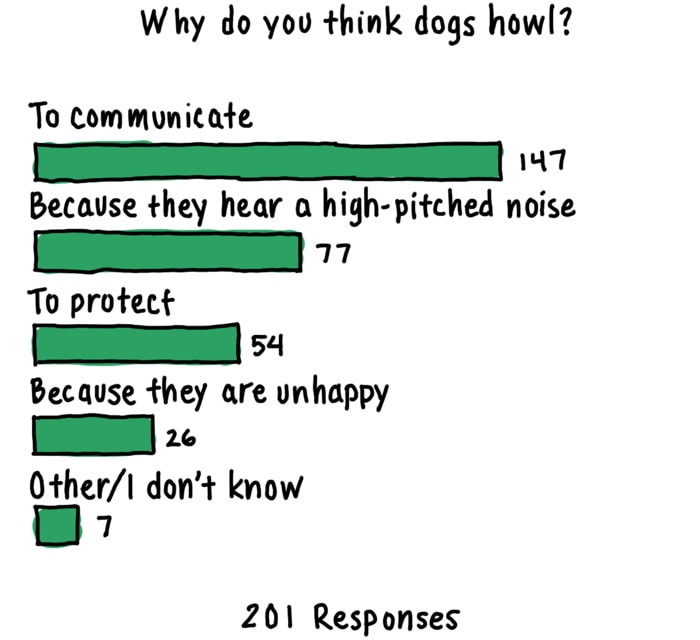
Every pet parent wants to know the meaning of dog howling. Now, we all know what howling sounds like - it’s a high-pitched sound that sounds like a doleful cry. However, many of us are still quite unaware of why do dogs howl. Well, here’s a fun fact: howling for dogs is genetic inheritance. It’s no news that dogs are closely related to wolves. Despite the difference in their sizes, wolves and dogs share around 99% DNA. However, heredity is not the only reason why dogs howl. So, what does it mean when a dog howls, and how can you handle your howling dog? You will find answers to such questions in this article.
To handle a howling dog, you first need to understand the reason why your pet is making this long, wailing noise. Here’s a look at some probable causes of dog howling.
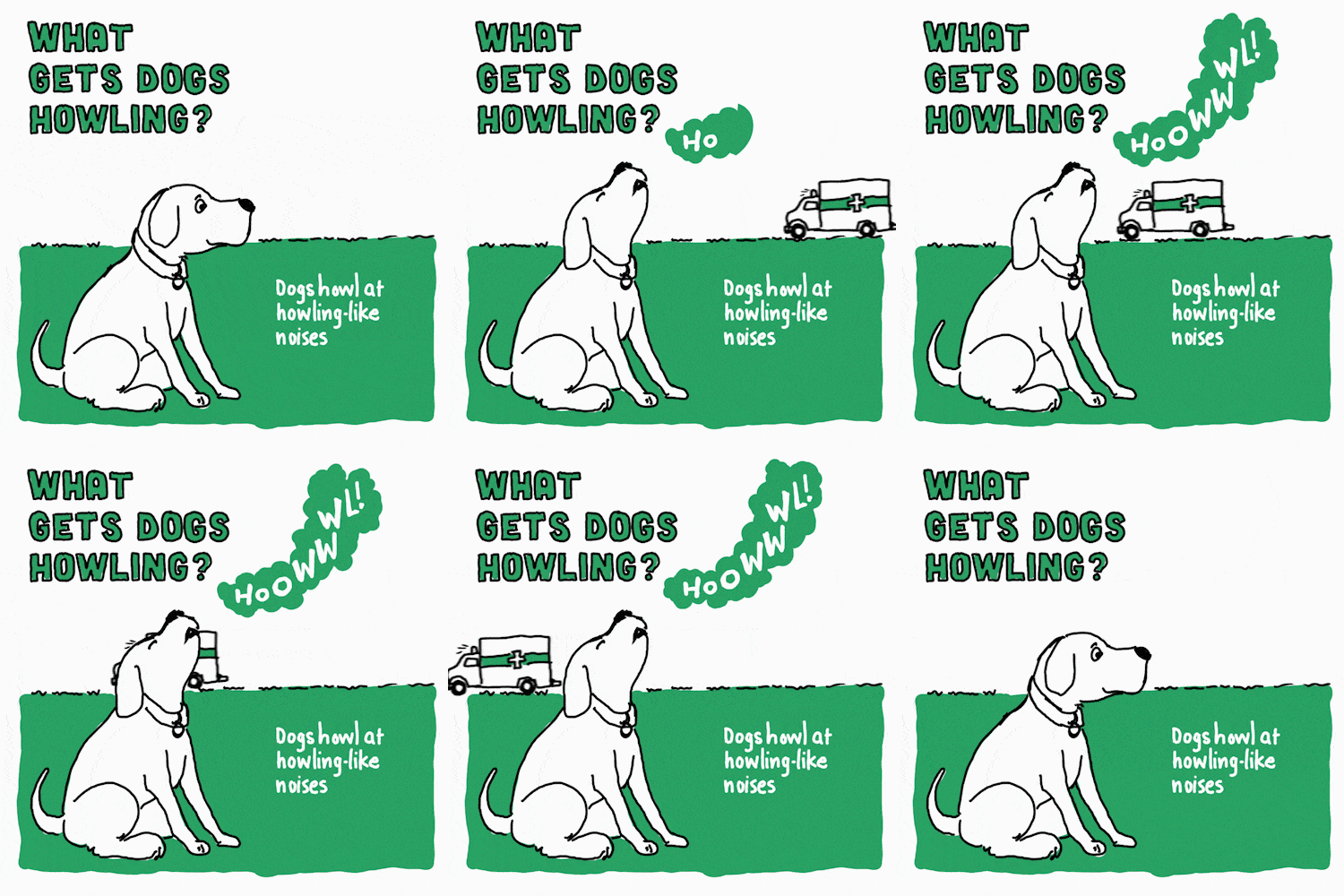
Dogs feel stimulated by high-pitched sounds. Howling is their way of responding to fireworks, sirens, bells, and other noises. This type of howling starts as soon as they hear the shrill sound. As a pet owner, you don’t have to worry about this type of howling since it usually stops when the trigger sound does.
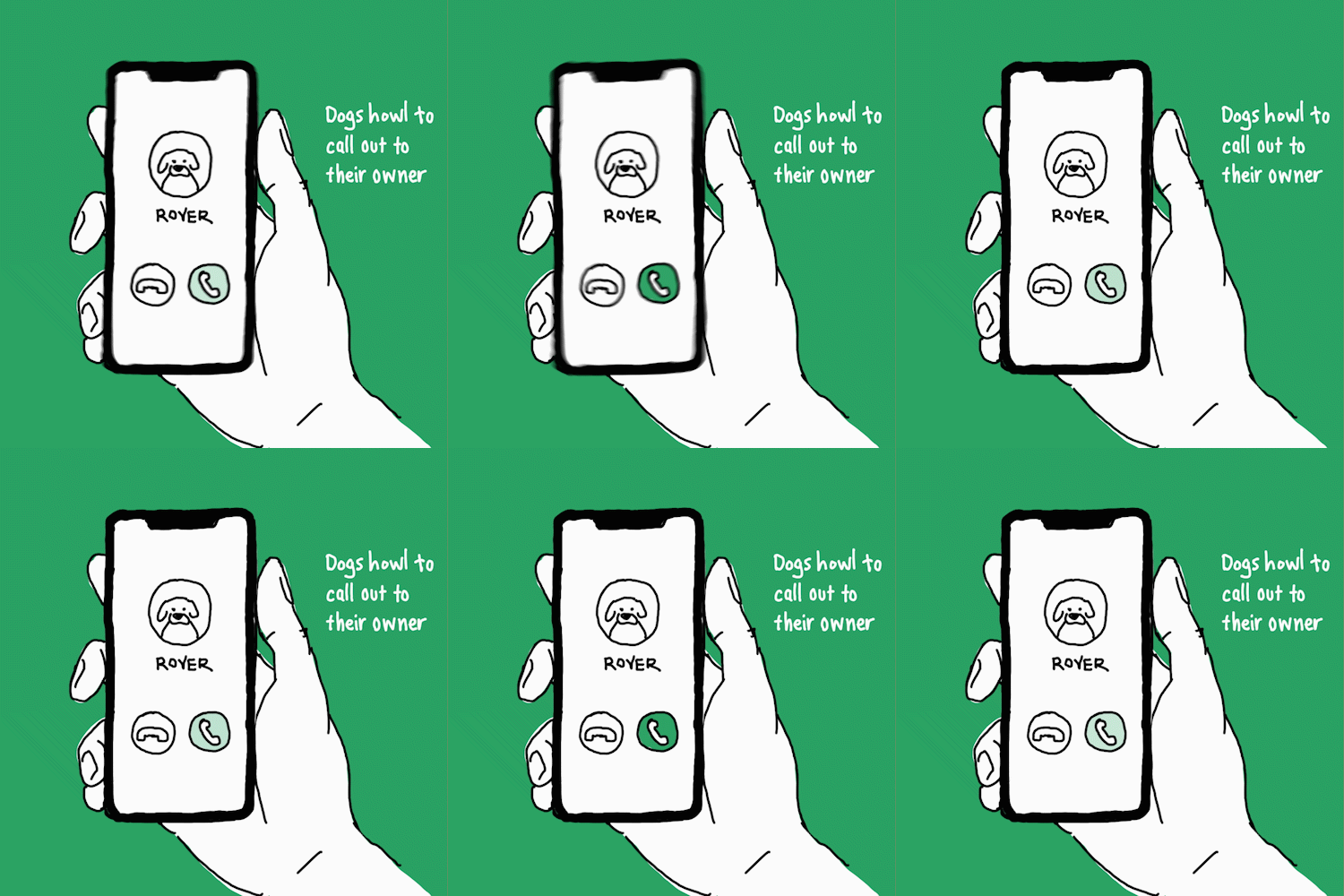
If a dog is excessively attached to you, they might experience separation anxiety. So, once your little companion learns that you won’t be around for a few days, they might start howling under stress and anxiety. If your dog howls every time you need to leave for a long period, it is a sign of hyper-attachment. You might have to treat their anxiety to manage this type of howling. And no, scolding them is not the right way of doing it.
A howling dog could also be seeking attention. And this type of dog howling can be bothersome. You might feel like scolding, questioning, or holding your furball, but you must do the exact opposite of it. Avoid giving your pet any type of attention. Don’t pamper or scold them.
Dogs can sense bad weather, earthquakes, diseases, and so much more. Hence, you cannot rule out the fact that a howling dog could also be trying to alert you of something. Maybe they feel a situation is not right for you or could cause you potential harm. Dogs can sense the intentions of a person through their facial expressions. That’s exactly why dogs howl at some people who try to get near you or your house.
Dogs are still very social animals; it’s just that now we are their pack. When they miss us, they will howl in hopes we respond. Dr. James Serpell, BSc, Ph.D., Professor of Humane Ethics & Animal Welfare at the University of Pennsylvania School of Veterinary Medicine, explains it this way: That [howling] is an attempt on the part of the dog to ask the owner, ‘Where are you so that I can rejoin you?’
Dr. James Serpell doesn’t believe so. “My own research has shown that it is common across breeds. People think huskies may be more prone to group howling.”
Dogs going through separation anxiety may howl excessively when left home alone. Dr. Jo Gale, BVetMed CertLAS MRCVS, Senior Manager for Global Science Advocacy at Waltham Petcare Science Institute, says, “If you reinforce quiet behavior, they are less likely to continue howling.” You can do this by quieting your dog and then leaving for a very brief time before returning and rewarding them when they stay quiet. Gradually increase the time you’re gone to reassure them you’ll always be back.
But what if your pawsome pet is howling due to other reasons? Let’s understand how to handle such situations:
Note: Training your fur baby is a time-consuming process. Hence, stay consistent with the actions recommended above and your pet will learn to control their howling triggers