IAMS SG
Why Is My Dog Shaking?

adp_description_block161
What To Do When My Dog Is Shaking?

  • Share

Since we cannot directly communicate with our dogs, there are certain behaviours and actions that immediately concern us. One of these behaviours is a dog shaking. No, not the fun way they shake off water starting from their nose all the way to the end of their tail. We’re talking about that full-body trembling you’ve likely seen your pooch do from time to time. Why do they do it? And is it something you should be worried about?

Why is my dog shaking?

A majority of dog owners in an IAMS™ survey* (64%) think the reason behind a dog shivering is that they are cold. Other top responses were because the dogs are scared (57%) or anxious (54%). High-fives all around because it turns out there are a number of reasons why dogs shake, and all those are possible correct answers. Here are some probable reasons behind a dog trembling:

  • They're chilly

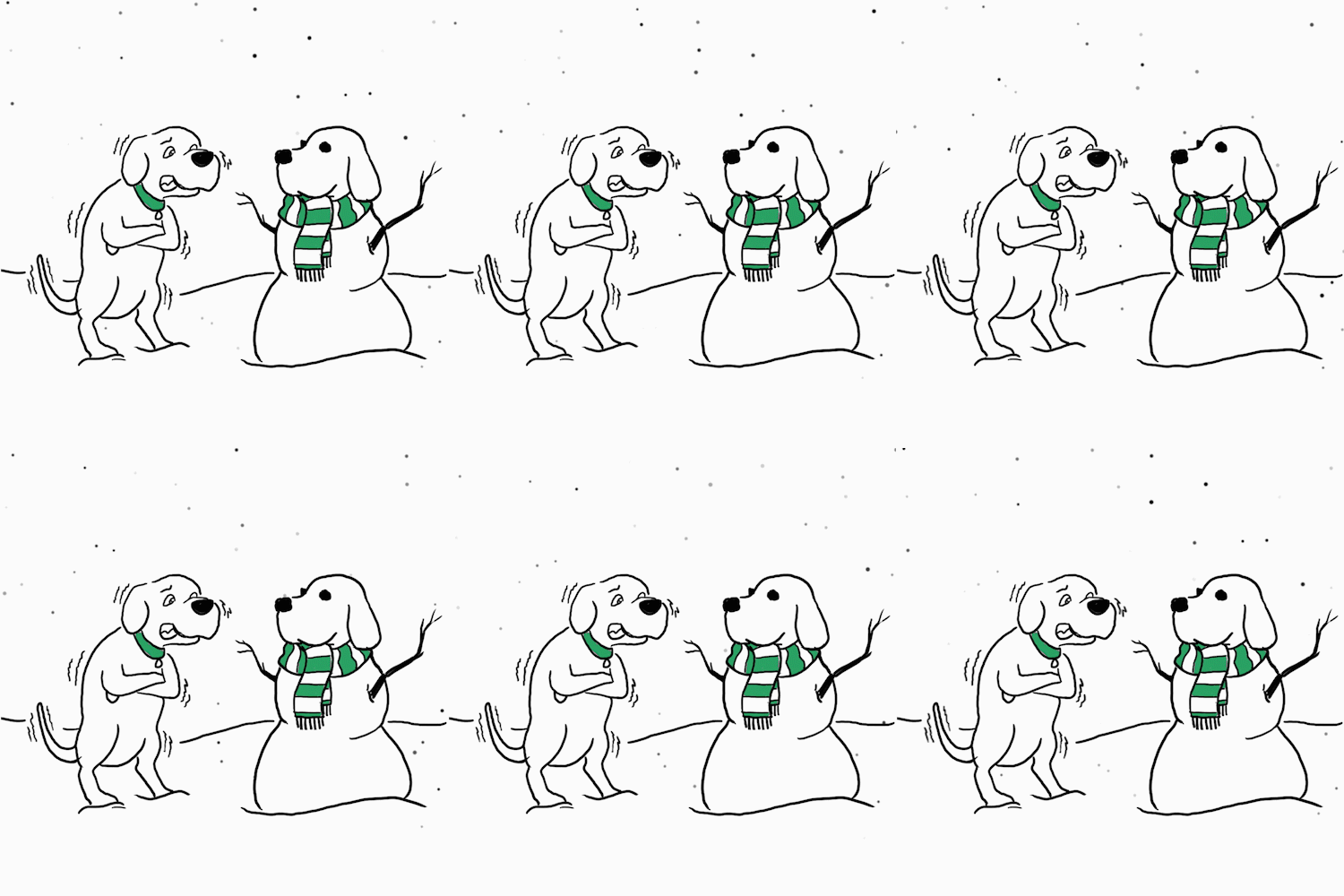
Just like their owners, dogs will often shiver when cold. Dr. Tammie King, Applied Behaviour Technical Leader at Waltham Petcare Science Institute, says: “Dogs shiver in response to falling temperatures. Dogs with short or no hair are especially susceptible. You should get them warm, put coats on them or bring them inside.”

shake fr dogs

  • They're anxious or scared

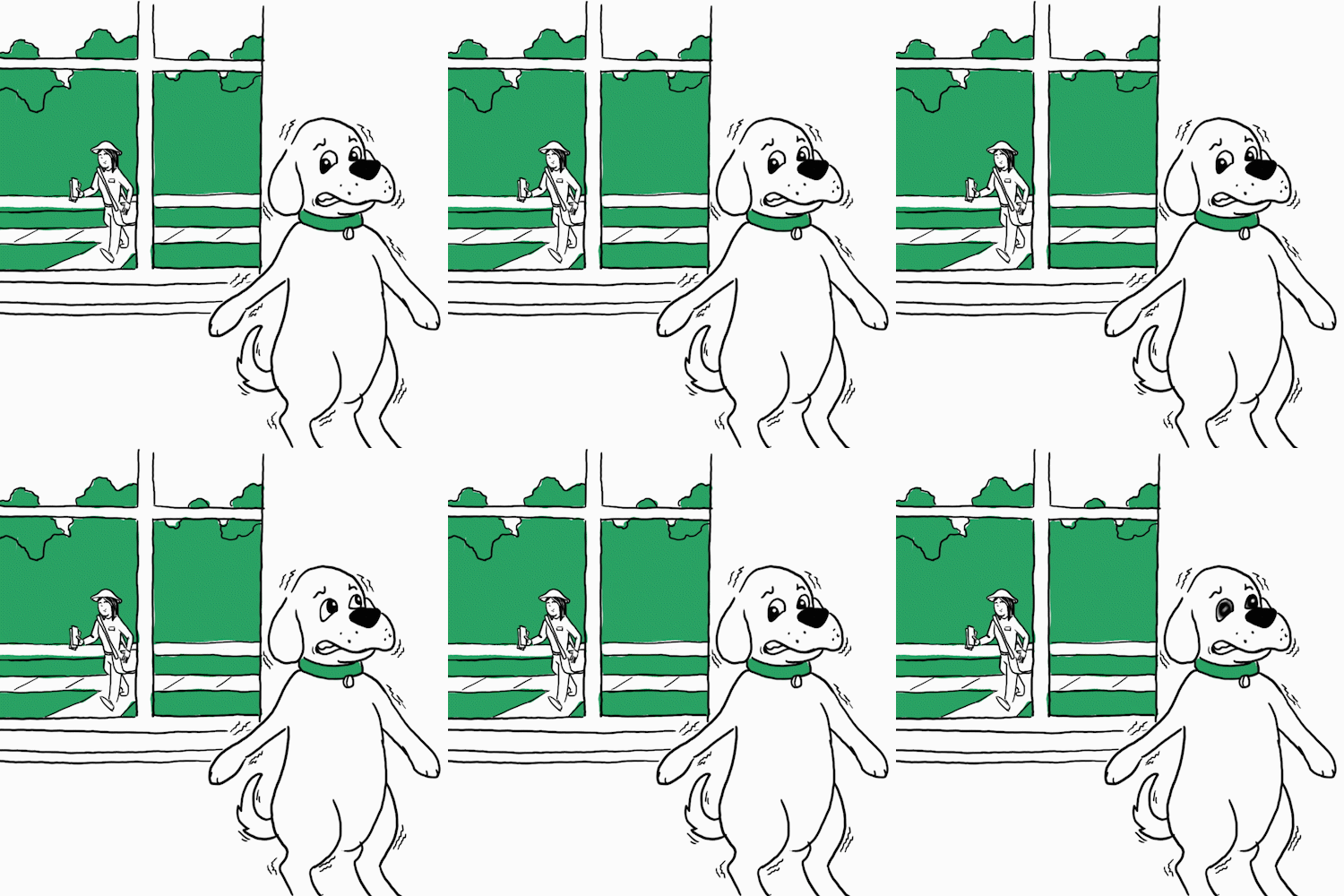
“Shaking is a response to epinephrine or adrenaline secretion — a sign of anxiety where the dog is on high alert,” says James Serpell, B.S., Ph.D., Professor of Humane Ethics & Animal Welfare at the University of Pennsylvania School of Veterinary Medicine. You may notice this when you’re at the vet or there’s a situation where they feel threatened. Dr. Serpell also offers a way to help in some cases: “Identify what’s triggering the behaviour. Provide them comfort. Going forward, you can gradually desensitise your pet to the thing it’s afraid of.”

shake fr dogs

  • They’re excited

This is probably the most comforting answer to every dog owner’s concern. Apart from being a response to anxiety or stress, a dog’s trembling can also be a result of excitement. This trembling or shaking is not a matter of concern and will stop once the animal calms down.


  • They're not feeling well

Trembling can also be a sign of serious issues like injury, poisoning, or kidney disease. Dr. Jo Gale, BVetMed CertLAS MRCVS, Senior Manager, Global Science Advocacy at Waltham Petcare Science Institute urges pet owners to be vigilant: “If a pet is unwell in another way, they could be trembling.” If their shaking is accompanied by symptoms like diarrhoea, limping, or vomiting, you should consult your vet straight away.

  • They’re suffering from Shaker syndrome

Shaker syndrome has been observed in white dogs of smaller-sized breeds. It causes shivering in a dog’s entire body. The precise cause of this syndrome is not yet known; however, your vet will be able to prescribe medications upon close examination.


  • They’re getting old

Old age is also a pretty common cause of shaking and shivering in dogs. This is because age reduces tolerance to even a slight amount of cold. Besides that, shaking can also be a result of other old-age-related issues like joint pains or weakening of limbs.


When to see a vet for dog shivering or shaking?

As mentioned earlier, you should immediately consult a vet if, along with shaking, your dog is also experiencing vomiting, limping, or diarrhoea. Even though shaking is a common symptom of old age-related issues, you must take your dog to the vet. If they are suffering from joint pain, early treatment is necessary. It is also advisable to visit a vet if your dog’s shaking or shivering hasn’t stopped even after a few minutes. 

Additionally, if you ever notice violent shaking in your dog, it might actually be a seizure. In such a case, rush to an emergency room as quickly as possible.

FAQs on Why is My Dog Shaking

  1. Why is my dog shivering?
  2. Your dog may be shivering due to the cold or because they are stressed out. If you are unable to identify the exact cause of dog trembling or shivering, do reach out to a vet immediately.

  3. What should I do if my dog is shaking?
  4. Firstly, identify the potential cause for your dog to shake or tremble. If your dog is shaking out of excitement, anxiety, or stress, it is not a matter of concern, and you can simply try to calm the pet down. If the animal is shaking due to cold, wrap it in blankets and layers until the dog’s shaking stops. However, if neither of these is the cause, look for other symptoms of illness or injury. The shaking might be due to either of those, and your dog may need immediate medical help.

  5. How do you comfort a shivering dog?
  6. If your dog is shivering due to cold, wrap them in blankets until they feel warm. If they are feeling anxious, you can take them to a place where they feel safe. You can also talk to them in a comforting tone until they feel calm.

  7. Should I be worried if my dog is shaking?
  8. A dog’s shaking or shivering is not always a matter of concern. For instance, if it is caused by anxiety, stress, or excitement, the shaking will stop in a few minutes, or as soon as your dog calms down. Also, if it is caused due to cold, it will stop once your dog feels warm again. However, if it is caused due to an injury, or is accompanied by symptoms like vomiting and diarrhoea, it is a matter of concern and needs immediate attention from a vet. You may also need to consult a vet if your dog is a senior suffering from shaking or trembling.

  9. What does it look like when a dog has tremors?  
  10. Tremors in a dog are involuntary and rhythmic muscle movements which may occur in the entire body or in parts of the body. These movements may either be fast or slow.

  • Why Do Dogs' Eat Grass?
    Why Do Dogs' Eat Grass?

    adp_description_block476
    Why Do Dogs' Eat Grass?

    • Share

    Have you ever spotted your beloved canine companion nibbling on the lush green blades in the backyard and found yourself pondering the reason behind this seemingly peculiar behaviour? This intriguing habit has fascinated pet owners and experts for generations. In this blog, we will explore the various factors that might drive your furry friend to indulge in this grassy feast, unfolding the mystery behind their seemingly strange dietary preferences and habits.
     

    Why do dogs eat grass?

    Dogs have been known to display a liking towards occasionally nibbling on grass. While the exact rationale may differ from one dog to another, several theories attempt to shed light on this behaviour, providing explanations for this habit. Understanding the underlying motivations can provide valuable insights into our furry friends’ dietary preferences. Your dog could be eating grass due to various causes, some of which are listed below.

    • They like it

    Some dogs simply relish the taste and texture of grass, which might be due to the change in taste, texture, or smell during different seasons. For them, indulging in a bit of greenery might be akin to us savouring a favourite snack. It may not necessarily serve any particular purpose other than fulfilling a canine craving for something different and intriguing, making it a harmless pastime that satisfies their curious taste buds and offers them a brief moment of sensory delight amid their daily routines.

    • They are bored

    In certain instances, dogs may resort to grass as a means of alleviating boredom and seeking sensory stimulation. Particularly for those lacking sufficient mental or physical engagement, exploring the various textures and tastes of the outdoors can serve as a form of entertainment, helping to pass the time and provide a temporary distraction from their otherwise monotonous routines. This act of grazing on grass could serve as a form of mental enrichment, offering them a much-needed change of pace and an opportunity to engage their senses.

    • They need fiber

    Dogs, like humans, require a certain amount of fibre in their diets to maintain a healthy digestive system. Since grass is a natural source of fibre, sometimes dogs can eat grass instinctively to aid in digestion, especially if their regular diet lacks adequate fibre content. This act of consuming grass could potentially help them regulate their digestive processes, promoting better overall gut health and ensuring smooth bowel movements, contributing to their overall well-being and physical comfort.

    •  It helps them fight parasites

    Surprisingly, grass contains certain properties that could aid dogs in purging their system of any potentially harmful intestinal parasites. By inducing vomiting through grass consumption, dogs might instinctively attempt to cleanse their digestive tract, ridding themselves of any unwelcome parasites that could be causing discomfort or distress. This natural mechanism could be a part of their innate self-care routine, serving as a means of maintaining their overall health and well-being while safeguarding them from potential health risks posed by internal parasites.
     

    Pay attention to your dogs' grass-eating habits 

    Keeping a close eye on your dog's grass-eating habits is essential for understanding their overall well-being. Despite common assumptions, the act of consuming grass does not necessarily indicate an underlying illness, with reports suggesting that only about 10% of dogs appear to be unwell before indulging in grass. This emphasises the importance of paying attention to other cues to gauge your pet's health accurately and understand if grass is good for dogs.
     

    Furthermore, it is worth noting that most dogs, approximately 25%, who consume grass do not end up vomiting regularly after grazing. This challenges the conventional notion that grass consumption leads to subsequent vomiting. Some experts propose that this behaviour might aid in digestion or cater to specific nutritional requirements, such as the need for additional dietary fibre, indicating a potentially intuitive dietary mechanism in canines.
     

    However, as mentioned previously, it is plausible that your dog simply relishes the taste or texture of grass, viewing it as a form of sensory stimulation. By closely observing your dog's grass-eating patterns and any accompanying behaviours, you can discern whether this habit is a matter of preference or indicative of underlying health issues that require attention. This vigilance allows for a comprehensive understanding of your pet's dietary preferences and potential nutritional needs.
     

    Know whether you should stop them from eating grass, and if so, how?

    If you suspect your dog is eating grass out of boredom, it is crucial to ensure it is getting sufficient exercise and mental stimulation. Consider incorporating engaging activities into its routine, such as playing interactive games like fetch or providing it with durable chew toys to keep it occupied and mentally stimulated.
     

    In cases where your dog's grass-eating behaviour stems from a potential nutritional deficiency, transitioning to a higher-quality dog food, particularly one rich in dietary fibre, could help address the underlying issue. Consulting with a veterinarian to determine the most suitable dietary adjustments for your dog is advisable to ensure it receives the necessary nutrients.
     

    While most experts agree that grass consumption itself isn't harmful, it's important to remain mindful of potential hazards. Some lawn treatments, including herbicides and pesticides, can be toxic if ingested. Similarly, several common household and garden plants are toxic to dogs, leading to health complications if consumed alongside grass. Being vigilant about the types of plants and substances your dog has access to will significantly mitigate potential risks associated with their grass-eating behaviour.


Close modal