Enter a keyword below to search for articles and products.


Feeding your dog the right nutrients and a complete, balanced diet doesn’t have to be a head-scratcher. Find out how to choose the right dog food, how often to feed your dog, how to handle treats and supplements, and much more.
We often find ourselves wanting to share our meals with our furry companions. While it's natural to want to share every aspect of our lives with them, should we really include dogs in our gastronomic adventures? Let’s find out!
The answer is both yes and no. While dogs are omnivores and can eat a variety of foods, their digestive systems differ significantly from ours. This means that some human foods that are perfectly safe for us can actually be harmful or even toxic to our canine companions.
Here are some safe and healthy human foods dogs can eat:
Beware of these common human foods that are toxic to dogs:
While it's certainly tempting to share our meals with our beloved furry companions, it's crucial to remember that their dietary needs are distinct from ours. Human foods, even those seemingly harmless, can be detrimental to a dog's health.
Why? Unlike human food, dog food is specially formulated to meet their specific nutritional requirements. It's a carefully balanced diet packed with proteins, essential vitamins, minerals, and other nutrients vital for their overall well-being.
For instance, IAMS dog food is crafted with your dog's health in mind. It provides a range of benefits such as:
Our ultimate goal is to take the best care of our dogs. This means feeding them with nutrient-rich foods that cater to their specific dietary needs. By choosing the right food, like IAMS products, you ensure that your dog stays healthy, energetic, and happy.
Yes, you can feed your dog certain healthy human foods. Carrots, cooked salmon, blueberries, cooked eggs, and unsweetened, unsalted peanut butter are safe options. However, always introduce new foods gradually and in moderation to avoid digestive issues and ensure your dog's health.
Cooking human foods for dogs is possible, provided you choose safe ingredients and avoid harmful seasonings or oils. Foods like scrambled eggs, plain cooked salmon, and carrots are nutritious for dogs. Remember, cooked meals should complement, not replace, a diet primarily made of dog-specific food.
The best food for your dog is a balanced diet formulated specifically for their nutritional needs. Brands like IAMS offer [dog food] that provides balanced nutrition, including proteins, essential vitamins, and minerals. These cater to specific life stages and breeds, ensuring your dog's overall well-being.
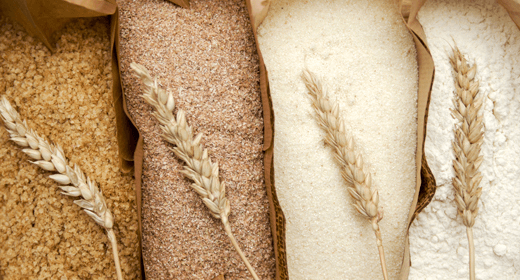
Wheat is a grain used as a high-quality carbohydrate source in dry dog foods and biscuits. It provides energy for daily activity, as well as processing characteristics for the food. IAMS™ research has shown that including wheat in a complete and balanced diet results in a moderate glycemic response in dogs, which is lower, in general, than the response observed when a rice-based diet was fed. 1,2
A common misconception is that feeding wheat causes food allergies. The facts are:
Gluten (a protein found in wheat) is responsible for wheat-sensitive enteropathy, occasionally found in Irish Setters from the United Kingdom. Gluten enteropathy of Irish Setters is a malabsorption syndrome, which responds to the removal of wheat (gluten) from the diet. This condition is very rare, and the reason some dogs develop it is not yet clear.
1 Sunvold GD. “The role of novel nutrients in managing obesity.” In: Recent Advances in Canine and Feline Nutrition, Vol II: 1998 IAMS Nutrition Symposium Proceedings. Carey DP, Norton SA, Bolser SM, eds. Wilmington, OH: Orange Frazer Press, 1998; 123–133.
2 Bouchard GF. “Effect of dietary carbohydrate source on posprandial plasma glucose and insulin concentration in cats.” In: Recent Advances in Canine and Feline Nutrition, Vol III: 2000 IAMS Nutrition Symposium Proceedings. Reinhart GA, Carey DP eds. Wilmington, OH: Orange Frazer Press, 2000; 91–101.
3 Jeffers JG. “Responses of dogs with food allergies to a single-ingredient dietary provocation.” J Am Vet Med Assoc. 1996, vol 209(3): 608–611.