Enter a keyword below to search for articles and products.
Picking the right food for your pup is key to ensuring its healthy growth. While both puppy food and adult dog food seem similar, they serve different nutritional purposes tailored to distinct life stages. Understanding this disparity is vital in guaranteeing the overall well-being of your beloved companion.
Puppies are more than just mini versions of adult dogs. Their nutritional needs are unique and crucial for their growth spurt and cognitive development. Specifically designed with the perfect blend of proteins, fats, vitamins, and minerals, puppy food supports bone and muscle growth. With their endless energy, they need the extra calories that puppy food provides. Plus, the added dose of nutrients like calcium and phosphorus is essential for strong bone development. So, stick to puppy food until your furball hits full physical maturity, ensuring a strong and healthy foundation for their adult life.
When a puppy can eat adult dog food isn't a one-size-fits-all deal. It is a gradual process that demands attention to your dog's unique traits. Generally, it is wise to make the switch when your pooch is about 80-90% of its expected adult size. But remember, a sudden change can upset their tummy.
To ease the shift, start by mixing small portions of adult food with their usual puppy fare. Over a week or two, increase the adult food ratio until your dog is entirely comfortable with the new diet. Don't forget to consult your vet to ensure a smooth transition and a lifelong, balanced diet for your four-legged friend.
When figuring out when to transfer to adult dog food, the size of your growing dog plays a crucial role. Given below is a comprehensive guide:
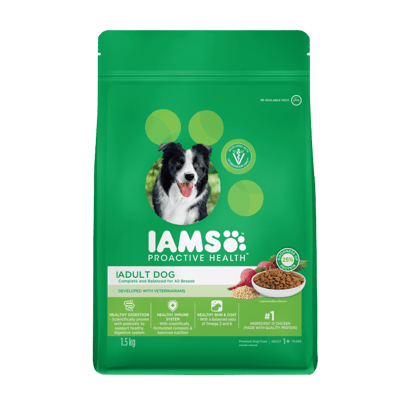
At IAMS, we offer a range of adult dog food that are rich in nutrients like protein, vitamins, minerals and more to provide your pooch with a complete and balanced meal. We have specialised recipes for each breed, targeting the specific nutritional needs of small, medium, and large sized dogs.
As your canine companion transitions from the puppy stage to adulthood, providing it with an appropriate diet becomes crucial for its long-term health and well-being. Adult dog food serves as a vital component in ensuring that your dog receives the necessary nutrients to maintain optimal health and vitality. Here are some key reasons why adult dog food is essential for your furry friend's overall wellness:
So, as your dog grows, make sure its diet grows as well. With the right adult dog food, tailored to its needs, you are laying the foundation for a life full of tail wags and playful barks.
Transitioning your furry friend from puppy to adult dog food is not just about changing what is in the bowl; it is a gradual adjustment that involves considering evolving nutritional needs, portion sizes, meal frequencies, and more. Here is a structured guide to help you ease your pup into their new diet over a 10-day period:
Start by mixing 75% of the puppy food with 25% of the new adult dog food. This allows your pup to get accustomed to the new flavours and textures while maintaining some familiarity with the old food.
Increase the proportion of adult dog food to 50% while decreasing the puppy food to 50%. This step continues the gradual transition, helping your dog's digestive system adapt to the new food without causing any sudden upsets.
Continue the transition by serving 75% of the new adult dog food mixed with 25% of the remaining puppy food. This step allows their taste buds to fully adjust to the new diet while ensuring a smooth transition without any digestive disturbances.
By this point, your pup should be ready to completely switch to adult dog food. Serve only the new adult dog food, ensuring that the portion size is appropriate for its age, size, and activity level. Maintain the recommended feeding schedule based on specific dietary needs.
Throughout the transition period, closely monitor your dog's eating habits, energy levels, and overall well-being. If you notice any digestive issues or reluctance to eat, slow down the process and give it more time to adjust. Providing plenty of fresh water and sticking to a consistent feeding schedule will help make the transition as smooth as possible for your beloved canine companion.
Remember, a smooth transition from puppy to adult dog food is all about taking it slow and steady. By gradually introducing the new food over a 10-day period, you give your pup's digestive system the time it needs to adjust without causing any discomfort. Keep a close eye on its response throughout the process, and do not hesitate to make adjustments if necessary. With patience and careful monitoring, you can ensure that your loyal companion makes a seamless shift to their new, adult-dog-friendly diet.
Puppies should not eat adult dog food as it lacks essential nutrients for their growth. Choose puppy-specific food until adulthood.
A 5-month-old puppy should eat high-quality puppy food rich in protein and essential nutrients, promoting healthy growth and development.
Dogs are typically considered puppies from birth to one year, although this can vary based on breed size.
The right age to switch your pooch from puppy food to adult dog food can vary basis multiple factors. However, here’s how these furry beings are generally switched to adult dog food basis their breed size.
Breed Size | Age |
Small | 9 to 12 months old |
Medium | 10 to 12 months old |
Large | 12 to 16 months old |
Giant | 18 to 24 months old |
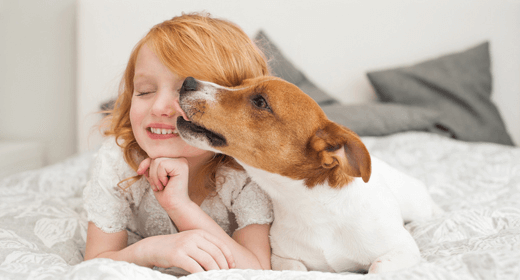
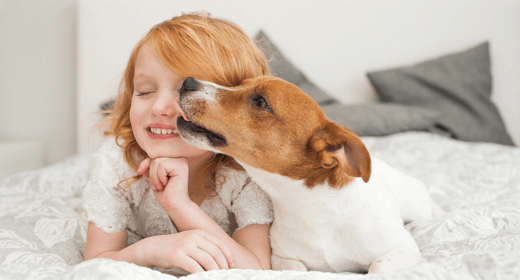
There’s no doubt that dogs are affectionate creatures. And they have numerous ways of showing it. One of these ways is by licking their owners. You may enjoy it when your furry friend comes up and gives you a big ol’ pooch smooch. But why do dogs lick you? In a poll* of dog owners, IAMS™ found a large majority (75%) believe dogs lick people to offer signs of friendliness. That’s definitely a correct assumption. Let’s dive a bit deeper for a better understanding.
Licking has been a social behaviour among dogs since the days of the great-great-great granddaddy wolf. 'It’s a standard canine greeting to lick others around the face,” agrees James Serpell, B.S., Ph.D., Professor of Humane Ethics & Animal Welfare at the University of Pennsylvania School of Veterinary Medicine. “Junior members of the pack will run around and lick the mouths of more senior members.” But is that all that there is to dog licking behaviour? Or are there more reasons why dogs lick people? Let’s find out!
Here are a few reasons that can explain why dogs like to lick.
For dogs, licking is equivalent to kissing or showing affection. You may have noticed female dogs licking their puppies which is a behaviour that is intended to show affection. And your dog considers you part of their pack, so they show you affection the same way their kind does - by licking.
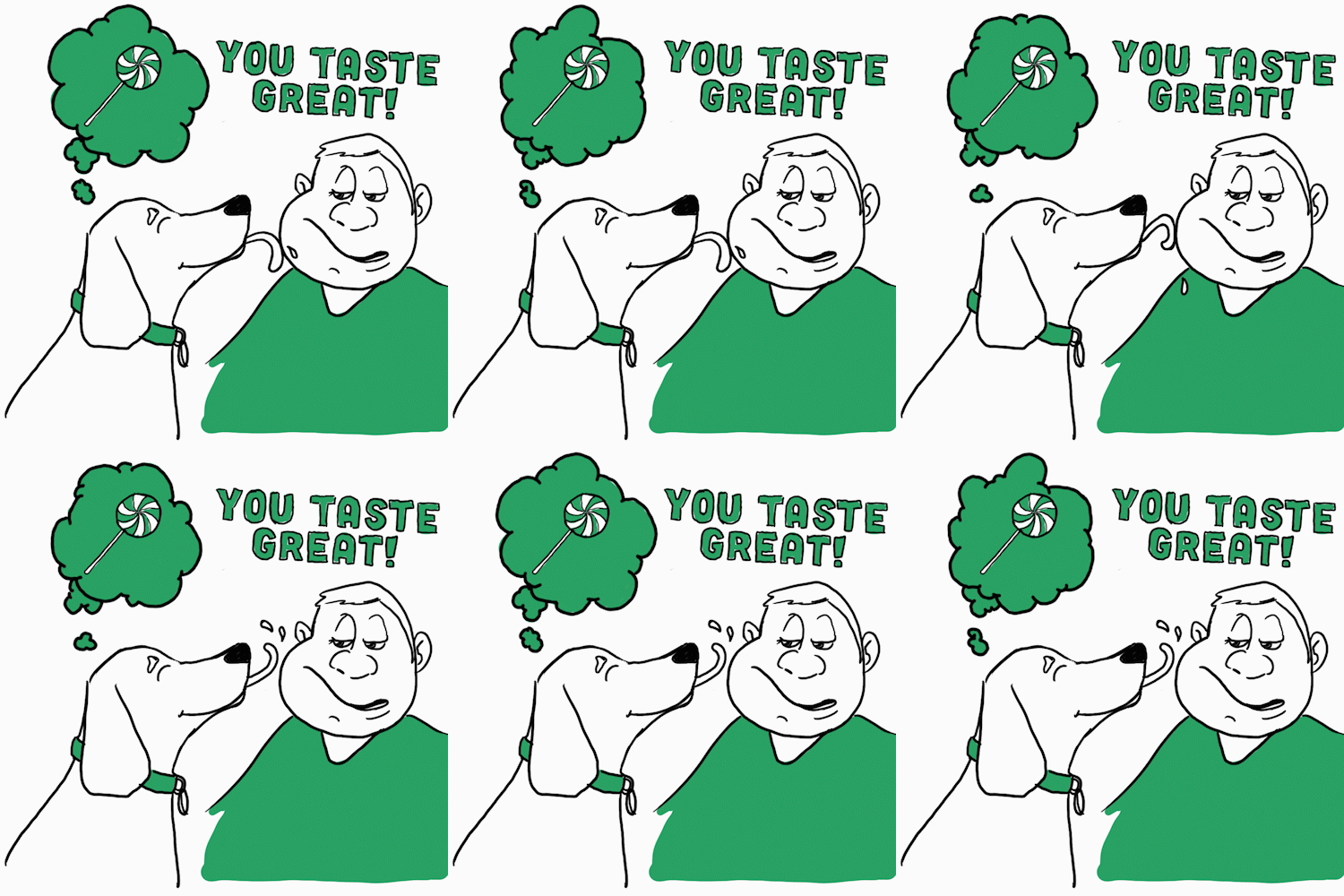
Dogs are oral creatures and gather a lot of information about their surroundings through taste and smell. Maybe you’re salty after a sweaty run. Maybe you’ve got barbecue sauce on your face. “Dogs can smell a lot better than we can,” says Dr. Jo Gale, BVetMed CertLAS MRCVS, Senior Manager, Global Science Advocacy at Waltham Petcare Science Institute, “so they find a lot more things interesting to lick than we can.” This is despite the fact that dogs only have about 1,700 taste buds compared to around 9,000 in humans.
Have you been too busy with work lately? Or has anything kept you inattentive toward your pooch? If so, it’s probably one of the reasons why your dog is licking you. It is also possible that your dog just got too bored and wants you to play with them, which is why they’re suddenly licking you.
That’s true. Much like humans, dogs can also suffer from obsessive-compulsive disorder, which can be concerning. It is often triggered due to stress and anxiety and makes the dogs suddenly begin licking. You will need to visit your vet if you suspect this to be the case.
Unlike humans, no other animals have knowledge about or access to proper healthcare. So, when they get injured, their first instinct is to lick their wounds. This helps them numb the pain to a certain extent, and also clean the wound. Thus, when your dog sees a wound on you, their natural instincts kick in and they try to help you by licking the wound, thinking it will clean the wound and lower the pain.
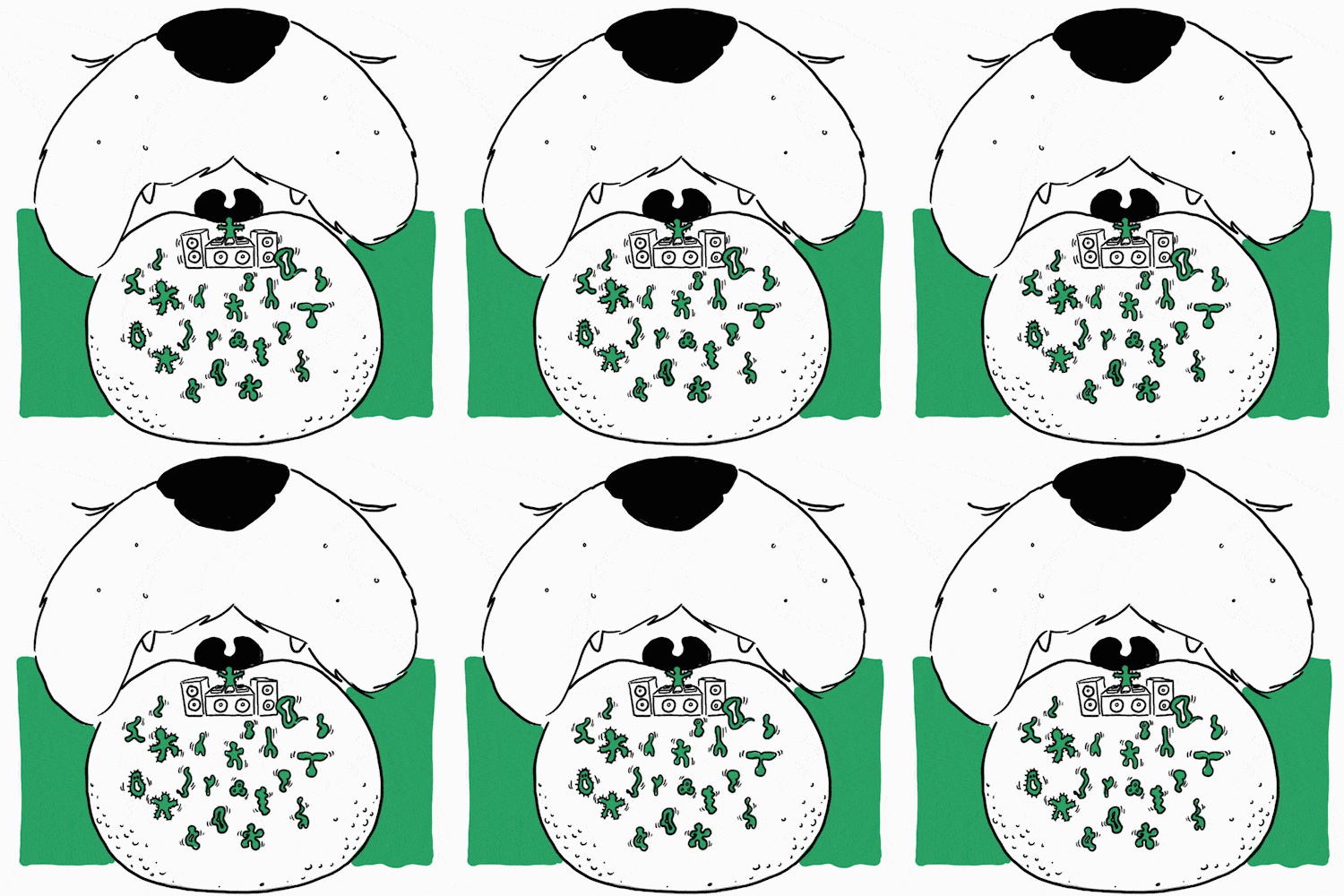
In fact, in ancient Greece, dogs at the shrine of Asclepius were trained to lick patients. In the Middle Ages, Saint Roch was said to have been cured of a plague of sores through his dog’s licking. The French even have a saying, “langue de chien, langue de médecin,” which translates to, “a dog’s tongue, a doctor’s tongue.”
Don’t cancel your health insurance just yet. While a dog’s saliva does have some possible bactericidal properties against some types of bacteria, it can put you at risk of exposure to others. Too much licking can also reopen the wound and cause further infection. With modern medicine, you’re much better off hitting the first-aid kit. And that myth about dogs’ mouths being cleaner than humans’? Not true — both contain over 600 types of bacteria.
While an occasional canine kiss is “aww”-inducing, some dogs can overdo it to the point of annoyance. When this happens, the best thing to do is “completely ignore it and give no attention,” suggests Dr. Jo Gale. “When they stop, provide them with attention.” This acts as a form of positive reinforcement. Over time your dog will learn to scale back on the smooches. Another thing you can try is training them to cut back on the licking. Remember to use positive reinforcement in this case too - reward them with treats or toys when they display good behavior.