Enter a keyword below to search for articles and products.


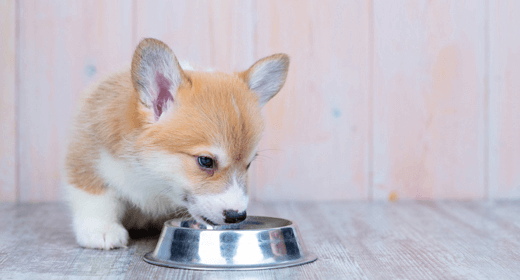
Keeping your puppy’s skin and coat healthy is as easy as 1-2-omega-3. Feeding studies have shown that dogs thrive on high-quality animal proteins from chicken, fish, lamb and eggs. IAMS™ ProActive Health™ Smart Puppy Original and other IAMS formulas are made with these highly digestible proteins, which promote excellent skin and coat condition and enhance your dog’s overall health and well-being. When your dog’s coat looks good, the rest of his body will likely be well nourished, too.
Learn more about two important nutrients that can maintain your puppy’s skin and coat health.
Fat plays a key role in keeping your puppy’s skin and coat in top condition. Fat not only provides energy, but it’s also a source of essential fatty acids that are necessary for the skin’s healthy structure. Fatty acids in the diet keep the skin moist and supple. They also contribute to a thick, lustrous and healthy coat. The lack of or imbalance of fatty acids can cause dry, scaly skin and brittle hair. A diet with vitamin-rich fish oils is vital to your puppy’s coat health and appearance.
Although there are many kinds of fatty acids, a few are important to coat health and appearance:
An appropriate balance of omega-6 and omega-3 fatty acids helps maintain your dog’s healthy skin and coat. An optimal range of omega-6 to omega-3 fatty-acid ratios is between 5:1 and 10:1 to enhance skin and coat quality and help nutritionally manage skin and coat conditions.
DHA (docosahexaenoic acid) is a key nutrient found naturally in breast milk and is important for a baby’s neural development. And just like a baby, a puppy’s ability to learn depends on healthy brain development.
At 6 weeks, a puppy's brain mass is approximately 70% developed. At this stage and in the months ahead, feeding your puppy a diet rich in DHA can help support neural development. Premium puppy foods such as IAMS™ ProActive Health™ Smart Puppy provide DHA in their formulas.

Feeding your dog the right nutrients and a complete, balanced diet doesn’t have to be a head-scratcher. Find out how to choose the right dog food, how often to feed your dog, how to handle treats and supplements, and much more.
We often find ourselves wanting to share our meals with our furry companions. While it's natural to want to share every aspect of our lives with them, should we really include dogs in our gastronomic adventures? Let’s find out!
The answer is both yes and no. While dogs are omnivores and can eat a variety of foods, their digestive systems differ significantly from ours. This means that some human foods that are perfectly safe for us can actually be harmful or even toxic to our canine companions.
Here are some safe and healthy human foods dogs can eat:
Beware of these common human foods that are toxic to dogs:
While it's certainly tempting to share our meals with our beloved furry companions, it's crucial to remember that their dietary needs are distinct from ours. Human foods, even those seemingly harmless, can be detrimental to a dog's health.
Why? Unlike human food, dog food is specially formulated to meet their specific nutritional requirements. It's a carefully balanced diet packed with proteins, essential vitamins, minerals, and other nutrients vital for their overall well-being.
For instance, IAMS dog food is crafted with your dog's health in mind. It provides a range of benefits such as:
Our ultimate goal is to take the best care of our dogs. This means feeding them with nutrient-rich foods that cater to their specific dietary needs. By choosing the right food, like IAMS products, you ensure that your dog stays healthy, energetic, and happy.