Enter a keyword below to search for articles and products.
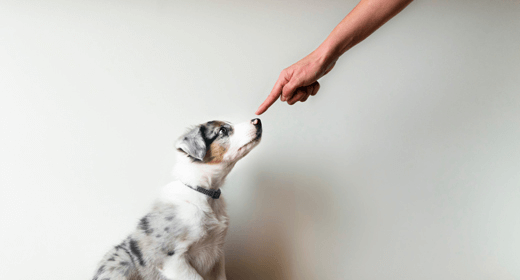
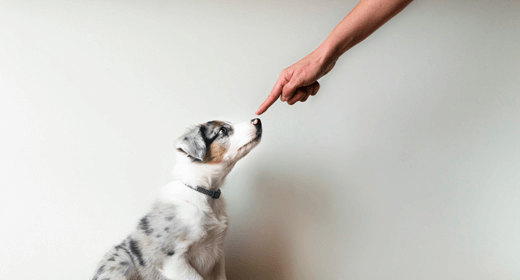
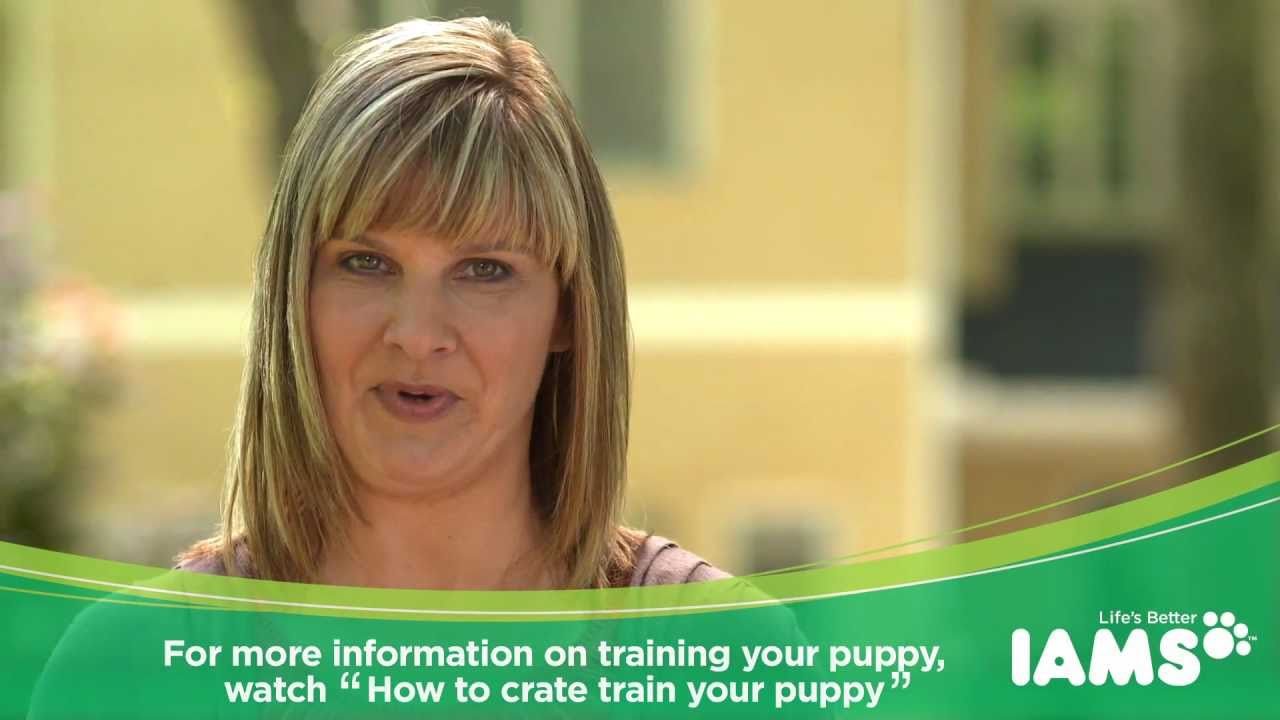
A new puppy is wonderful in pretty much every way, at least until they start having accidents around your apartment or house. But do not fear, Expert Pet Trainer Kathy Santo has all the answers. Watch as she takes you through the basics on everything from establishing a routine to rewarding your puppy when they eliminate outdoors.
House training your puppy requires more than a stack of old newspapers. It calls for patience, commitment, and above all, consistency. Hi, I'm Kathy Santo with IAMS, and today we're going to talk about how to house train your puppy. A trusting and consistent relationship is fundamental to successful house trading. The more consistent you are, the faster your puppy will learn. House training a puppy can take several weeks, and sometimes longer with smaller breeds. The first step to house training your puppy is to establish a routine. Puppies do best on a regular schedule, because it teaches them that there are times to eat, times to play, and times to potty. As a general rule, a puppy can control his bladder about an hour for every month of age. So if your puppy is only three months old, he can probably only hold it for about three hours, if not less. Make sure to take him right out after he wakes up, during and after play time, and after eating or drinking, because these are times he'd most likely to have to go. If you work, and are unable to take your puppy outside as often as needed, you could hire a dog walker to give your puppy his necessary breaks. I recommend picking a specific bathroom spot outside, and always taking him there first when he's on a leash. While your puppy is going, say something like, 'go potty,' so that you can eventually use that phrase to remind him what to do. You should take him out for a walk or play time after he's gone potty, or he might just learn to hold it to keep you outside. Reward your puppy every time he goes potty outdoors with praise or a treat, but make sure to do so immediately, before he goes back into the house. Rewarding correct behavior is the best way to teach your puppy. Be careful not to reward your puppy until he's completely finished, or he may forget to finish up outside, and then have an accident inside. And remember, what goes into a puppy on a schedule comes out of a puppy on a schedule. So always take your puppy out after feeding. Try picking up your puppy's water dish about two and a half hours before bedtime, so he won't have as much water to try and hold overnight. If you keep a consistent schedule, your puppy could be house trained by the time he's five to six months old. But don't be discouraged if it takes your puppy longer, or has an occasional accident. Many factors, including breed of dog, consistency, and temperament can contribute to a longer training period. If you feel that there's little to no progress, consult with your veterinarian to be sure that a medical issue, such as a bladder infection, isn't the culprit. Supervision in the beginning is critical. Exercise pens are extremely helpful while house training. Keeping your puppy in a small space within eyesight will allow you to notice and react when they start showing the signs of needing to eliminate. Those signs can be barking, scratching at the door, squatting, sniffing, or circling. If you're unable to monitor your puppy, you can confine him to an area small enough so that he won't want to eliminate there. A space just large enough for him to lay down with a couple extra inches is just fine. Many people choose to combine with a crate, which can be very helpful for house training your young dog. For more information on crate training, watch 'How To Crate Train Your Puppy.' I'm Kathy Santo with IAMS, and I hope that you found this helpful as you welcome your new addition to your family.


Deworming is the process of eliminating worms from the body, and it's an essential part of caring for your furry friend. Whether your puppy has already been diagnosed with worms or you simply want to take preventative measures, understanding how to deworm a puppy is crucial for their health and well-being.
But what exactly are worms, and how do puppies get them? Many types of worms can infect dogs, including roundworms, hookworms, whipworms, and tapeworms. These parasites are usually transmitted through contaminated soil, water, or food, and they can cause serious health problems if left untreated.
As a responsible pet parent, it's imperative to understand the process of deworming and how to keep your puppy safe and healthy. This blog will cover everything you need to know about deworming puppies, including the symptoms to look out for and the best ways to deworm your furry friend. Whether you are a new puppy parent or just looking to refresh your knowledge, this blog will provide the information you need to keep your pawfect pal worm-free.
Deworming your new pup is an indispensable part of adopting a dog. However, navigating the various deworming options and methods can be overwhelming. Here, we will uncover 4 must-knows to successfully deworming your puppy, including how often your puppy needs to be dewormed, the most effective treatment methods, and the importance of prevention. By understanding these key factors, you can ensure that your puppy remains happy and healthy, free from the discomfort and potential health risks caused by worms.
It's important to understand the importance of deworming your furry friend. This helps prevent the spread of worms and parasites, which can harm their health. Puppies need to be dewormed often due to their small size and underdeveloped immune systems.
According to experts, puppies should be dewormed every 2 weeks until 3 months of age and then every month until they are 6 months old. This helps to ensure that the worms are effectively eliminated from their system. It's also important to deworm pregnant dogs as they can pass worms on to their puppies in utero.
Along with deworming at regular intervals, good hygiene is essential to guarding against the spread of worms. Make sure you wash your hands after touching or playing with your puppy and clean up their waste immediately.
Overall, deworming is a crucial part of keeping your puppy healthy. Following a regular puppy deworming schedule and practising good hygiene can help protect your furry friend from harmful parasites.
Several worms can infect puppies, including roundworms, hookworms, whipworms, and tapeworms. These worms can cause various symptoms in puppies, including diarrhoea, vomiting, weight loss, and anaemia. It is important to deworm puppies regularly to prevent these worms from causing serious health problems.
Even if worms are not visible on your puppy, it does not mean they are not present. Some worms, such as tapeworms, can be challenging to detect because they are small and often pass through the stool in small pieces. Additionally, some worms can be present in the intestine without causing visible symptoms. Hence, follow a regular puppy deworming schedule and ensure that this four-legged angel is protected against these worms.
Worms in puppies can have many symptoms that can be difficult to spot, especially in young and small dogs. Common symptoms of worms in puppies include:
Deworming is especially important for puppies born to mothers who have worms, as they can be infected even before their birth. Following a proper deworming schedule and keeping an eye out for these symptoms can help keep your puppy healthy and happy. If you suspect your puppy has worms, it's important to take them to a veterinarian for treatment.
Worms are a common problem in puppies and can cause serious health issues if left untreated. The most common types of worms affecting puppies include roundworms, hookworms, and tapeworms. Symptoms of a worm infestation may include vomiting, diarrhoea, weight loss, and a pot-bellied appearance.
The good news is that worms are easily preventable and treatable in puppies. It's important to get your puppy on a regular deworming schedule, as recommended by your veterinarian. This will typically involve giving your puppy a deworming medication every few weeks until they reach a certain age. In addition, keeping your puppy's environment clean and preventing them from ingesting potentially contaminated objects can help prevent worms.
Suppose your puppy does end up with worms. In that case, your veterinarian will likely prescribe a deworming medication that can be given orally or through injection. It's important to follow the recommended treatment plan and continue the treatment for the entire prescribed course to ensure all the worms are eliminated.
Overall, it's important to be proactive in preventing and treating worms in puppies.