Enter a keyword below to search for articles and products.
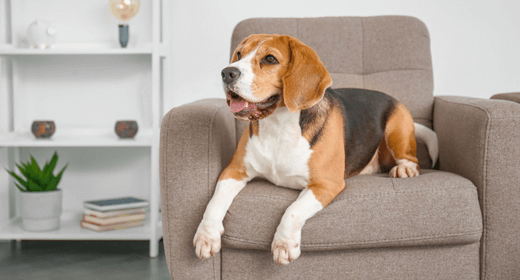
Between 25 and 40% of dogs are overweight, but often, owners don't know it until they take their dog to the veterinarian for another reason. Yet, even veterinarians can't tell if a dog is fat just by its weight. Ideal weight varies by breed, and quite widely within breeds. There's no ideal weight chart for all dogs!
You can judge your dog's condition by placing your hands on each side of his rib cage. Are the ribs protruding? Your dog may be too thin. Can you feel individual ribs easily, and is your dog's abdomen slightly tucked up when viewed from the side? That's the sign of ideal weight. If you can't feel the ribs easily, your dog has no waist, and his abdomen drags, he's too fat. Your veterinarian can help you further evaluate your dog's weight.
Before beginning any weight loss program with your dog, discuss it with your veterinarian.
You can begin your dog's weight-loss program by reducing caloric intake by 25% of his maintenance intake, and then decrease it by 10% increments every two to three weeks until a 1% weight loss per week is achieved. This means that, if your dog weighs 15 pounds, a 1% loss would be about 2-1/2 ounces.
If you feed one large meal a day or keep food available at all times, try dividing the daily ration into several small meals (at least two meals a day) and pick up what has not been eaten 30 minutes after each meal.
Dogs gain weight for the same reason that people do—they eat more calories than they use. Today's dogs share another problem with their parents: lack of activity. Most parents are gone all day and come home too tired to play with the dog.
Also, as dogs age, or after they are spayed or neutered, their metabolism might slow causing them to require less food.
Another reason for weight gain is frequent, high-calorie treats. Sometimes, more than one family member is feeding the dog, and the dog sure isn't telling!
Losing weight isn't easy. Changing habits is the key. Here are some ways you can help:
Determine who feeds the dog what and when. (Don't be embarrassed to admit you give your dog treats. Dogs are expert beggars.)
Substitute affection for treats. Give a pat or throw a ball when he noses your hand.
Take your dog for a walk more often. Even 10 minutes a day can help.
Feed him more often. It takes energy to digest food. Dividing your dog's daily ration into two or three feedings will help.
Reducing your dog's regular food amount by 25% should bring results.
If your dog is more than 15% overweight, your veterinarian might recommend a special food. Diet foods should be low in fat (under 20% of calories from fat).
Your goal is to help your dog be healthier, so select his food carefully. Some diet foods just add fiber to help the dog feel full. This can result in reduced digestibility, large stool volume, frequent trips to the backyard, and decreased skin and coat condition because the dog isn't getting enough fat and nutrients.
Find a food, such as IAMS™ ProActive Health™ Adult Healthy Weight, that has normal fiber levels to keep your dog's digestive system working properly. It should have high-quality protein so your dog doesn't lose muscle tone and essential fatty acids to help keep his skin flexible and coat glossy throughout the dieting process. After your dog reaches ideal weight, select a maintenance food to keep weight steady.
Obesity is a common problem in dogs. Identifying the causes and following a total weight management program can result in controlled weight loss and maintenance. A total weight management program includes evaluating your dog, then modifying behaviors and successful dog weight control.
Definition of obesity
Obesity is defined as an increase in body weight beyond the limitation of skeletal and physical requirements, resulting from an accumulation of excess body fat.
Causes of obesity
Obesity is caused when caloric intake exceeds caloric expenditure. This simply means that a dog eats more energy (calories) than he uses and stores the excess energy.
Factors contributing to obesity
Fat and carbohydrates
Dogs use fat as their primary energy source. An overweight dog stores fat more easily if the calories are consumed in the form of fat than if they are from carbohydrates. An overweight or obese dog should be fed a low-fat, high-carbohydrate diet to restrict calories available from fat, which is important for dog weight control.
Fiber and fatty acids
A normal fiber level, provided in a moderately fermentable fiber source, helps create and maintain healthy digestion. This is especially important for the dog on a diet. Some weight-loss foods for dogs dilute calories with high levels of fiber. High-fiber foods may reduce the digestibility and absorption of many nutrients, including fat. These foods reduce weight by providing what would be considered poor-quality nutrition. These high-fiber diets also result in large, frequent stools and decreased skin and coat condition. Dog foods such as IAMS™ ProActive Health™ Adult Weight Control, which provide essential fatty acids like those found in vitamin-rich fish oils, help maintain your dog's healthy skin and coat despite lowered fat levels.
Gradual Weight Loss
The goal of a good weight management program should be gradual weight loss. Dogs should lose 1% to 2% of their initial weight per week. This can be achieved by reducing the caloric intake by 30% to 50% of maintenance.
A total weight management program can lead to successful weight loss in the obese dog. Before beginning any weight-loss program with your dog, discuss it with your veterinarian. Remember, your support is essential to your dog's weight-control success.
Feeding your dog the right nutrients and a complete, balanced diet doesn’t have to be a head-scratcher. Find out how to choose the right dog food, how often to feed your dog, how to handle treats and supplements, and much more.
We often find ourselves wanting to share our meals with our furry companions. While it's natural to want to share every aspect of our lives with them, should we really include dogs in our gastronomic adventures? Let’s find out!
The answer is both yes and no. While dogs are omnivores and can eat a variety of foods, their digestive systems differ significantly from ours. This means that some human foods that are perfectly safe for us can actually be harmful or even toxic to our canine companions.
Here are some safe and healthy human foods dogs can eat:
Beware of these common human foods that are toxic to dogs:
While it's certainly tempting to share our meals with our beloved furry companions, it's crucial to remember that their dietary needs are distinct from ours. Human foods, even those seemingly harmless, can be detrimental to a dog's health.
Why? Unlike human food, dog food is specially formulated to meet their specific nutritional requirements. It's a carefully balanced diet packed with proteins, essential vitamins, minerals, and other nutrients vital for their overall well-being.
For instance, IAMS dog food is crafted with your dog's health in mind. It provides a range of benefits such as:
Our ultimate goal is to take the best care of our dogs. This means feeding them with nutrient-rich foods that cater to their specific dietary needs. By choosing the right food, like IAMS products, you ensure that your dog stays healthy, energetic, and happy.