Enter a keyword below to search for articles and products.
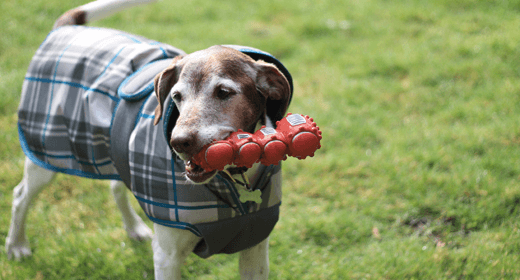
It depends on the breed of dog, but your pet's senior years generally begin at age 7. Louise Murray, DVM, director of the ASPCA's Bergh Memorial Animal Hospital in New York City and author of Vet Confidential (Ballantine, 2008), tells you what you need to know to keep your older dog spry and happy.
At this stage, Murray recommends taking your dog to the vet twice a year. 'So much can happen to an elderly dog,' she says. Your veterinarian can take blood annually to test liver and kidney functions. 'Discovering problems early is extremely important,' she says. Your vet can be on the lookout for conditions that often affect older dogs, such as anemia and arthritis.
Pay attention to what might be subtle changes in your dog's habits: Is she drinking more water or urinating larger amounts? These behaviors might indicate a liver or kidney problem. Have your dog's bowel movements shifted? This could indicate a digestive issue. Diabetes or digestive problems might cause your dog to eat more but still lose weight. Knowing the dog's patterns can help the veterinarian determine a course of treatment.
Continue to use preventive medicines.
Clean your dog's teeth daily. If she has tartar buildup, you might need to have her teeth professionally cleaned at your vet's office, which requires sedating your pet.
Your dog is probably less active, so steady, moderate exercise is best for her now. Don't turn her into a 'weekend warrior' who, after lying around on weekdays, accompanies you on a 10-mile hike on Saturdays. This is especially hard on an older dog's joints.


Rabies is one of the most serious health risks every pet parent must be aware of. In puppies primarily, this disease can manifest itself in particularly severe forms and often goes undiagnosed until it has already progressed to its later stages. Understanding the signs and symptoms of rabies in puppies can help you act as quickly as possible if your beloved pup ever becomes infected with this potentially fatal virus. Please continue reading to learn more about what rabies is, how it presents itself on a physical level, and which treatments may help save the lives of affected puppies.
Rabies is a viral infection that affects the nervous system of animals, including humans. It is transmitted through the saliva of an infected animal, usually through a bite or scratch. Symptoms include fever, headache, muscle spasms, and paralysis. If left untreated, it can lead to coma and death. Vaccination is the most effective way to prevent rabies.
Puppies can contract rabies just like any other animal, but they are generally not at high risk for it unless they are exposed to a rabid animal or live in an area where rabies is prevalent.
It is important to be aware of the signs of rabies in puppies so that you can take the necessary steps to protect your furry friend from this lethal virus. Some of the most common symptoms of rabies in puppies include:
These behavioural changes are often the first sign that rabies may be present in a puppy. Caregivers should watch for any aggressive behaviours or if their normally outgoing puppy appears withdrawn or unusually timid.
Suppose a puppy begins to lose its appetite or has trouble drinking water. In that case, this can indicate that it is infected with rabies.
Rabies can make a puppy appear disoriented and cause them to stumble when they walk.
A puppy infected with rabies may have difficulty controlling its muscles and suffer from paralysis in some areas of the body.
This is one of the more noticeable signs of rabies in puppies and is caused by the virus paralyzing the muscles controlling swallowing.
Puppies infected with rabies may make different sounds when barking or growling, such as a higher-pitched tone or a more strained voice quality.
Puppies with rabies may be overly fearful of water, even if they usually enjoy swimming or walking by the river.
Rabies can cause violent tremors and seizures, which can indicate the virus.
A puppy infected with rabies may have difficulty breathing as well as experience a choking sensation.
Rabies is a fatal virus that can cause the nervous system's deterioration, leading to death in some cases.
Pet owners must be aware of these signs of rabies in puppies, so they can seek immediate medical attention if their pet shows any of the symptoms listed above.
Several factors can contribute to rabies in puppies, such as:
Rabies is a viral infection that can be transmitted through the bite of an infected animal such as a bat, raccoon, skunk, or fox. Scratches from an infected animal too can cause rabies.
Rabies can also be transmitted through contact with an infected animal's saliva such as through a lick from an infected animal.
Occasionally, rabies can be transmitted from an infected mother to her puppies before or during birth.
Puppies that have not been vaccinated against rabies are at higher risk of contracting the disease.
Poorly maintained or unsanitary living conditions can increase the risk of puppies contracting rabies.
It is essential to get your puppy vaccinated against rabies as soon as possible. This disease can be fatal if not treated promptly and can also be transmitted to humans.
To prevent rabies, your puppy should receive a series of vaccinations at the following ages:
It is also important to keep your puppy up to date on all other vaccinations, including those for distemper, parvovirus, and hepatitis.
Before vaccinating your puppy, check with your veterinarian to determine the best vaccination schedule. Your veterinarian will also be able to provide you with more information on the risks and benefits of vaccination.
While vaccination is the ultimate prevention for your puppy, here are a few additional steps you can take to keep rabies at bay:
Rabies can be transmitted through bites or scratches from infected animals. Therefore, it is important to keep puppies away from wild animals, especially stray dogs and cats.
This will help prevent them from coming into contact with wild animals and other dogs infected with rabies.
Symptoms of rabies in puppies include lethargy, fever, loss of appetite, and changes in behaviour. If any of these symptoms are observed, it is crucial to contact a veterinarian immediately for further evaluation and treatment.
This will prevent them from coming into contact with wild animals and other dogs infected with rabies. If you must take puppies outside, supervise them closely and keep them on a leash.
Although rare, the possibility is real. To protect against this potentially fatal virus and quell any worries you may have, get your furry friend vaccinated with a rabies shot as soon as possible! If you are still concerned about their health after the vaccine, don't hesitate to consult a trusted veterinarian for advice.