Enter a keyword below to search for articles and products.


Here's what you need to know about your dog’s health as he matures from 1 to 8 years:
Your dog is growing up. Louise Murray, DVM, director of the ASPCA's Bergh Memorial Animal Hospital in New York City and author of Vet Confidential (Ballantine, 2008), gives advice on how to keep your dog in tip-top shape.
Adult Dog Health: Preventive Health. Even if your dog appears fit, see your veterinarian once a year for a checkup. 'Most health problems are more readily and less expensively addressed if you catch them early,' Murray says. What's more, your vet can detect problems that you might miss. You can also stay up to date on vaccination boosters.
Adult Dog Health: Flea, Tick, and Heartworm Medicines. Continue to use preventive medicines. Talk to your veterinarian if you've moved or if your lifestyle has changed to make sure you are using the products best suited for your dog.
Adult Dog Health: Diet. Your pet needs the right food for optimal health. Check with your vet about adjusting the type and amount of food that your dog eats.
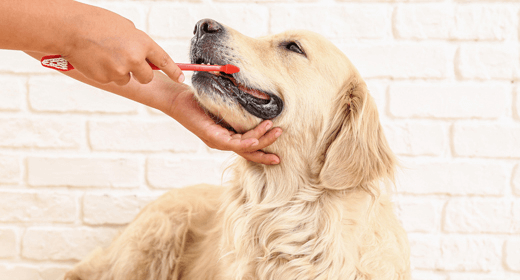
Adult Dog Health: Dental Health. If you haven't done so already, get in the habit of cleaning your dog's teeth daily. 'Animals who get gingivitis or inflammation of the gums can end up with problems of the kidneys and the heart,' Murray explains. Get your dog accustomed to having your fingers and hands around her mouth. At the pet store, you'll find dog toothbrushes and finger brushes as well as dog toothpaste.
Adult Dog Health: Weight Gain/Loss. When your dog steps on the scale at her annual visit, weight gain (rather than loss) is more likely to be the problem. Meals usually are not the culprit. It's the things, such as biscuits and human food, she gets in between. 'It all adds up,' Murray says. As your pet gets older, she becomes less active, which can contribute to weight gain and a host of other problems (diabetes, arthritis, and breathing trouble, for instance). But there's another reason to keep an eye on the scale: Weight loss might signal an underlying health problem.


Found in the blood and in the fluid that surrounds cells, sodium maintains the cellular environment and prevents cells from swelling or dehydrating. Sodium is also important for maintaining proper nerve and muscle cell function.
Meat, poultry, fish, and eggs are good sources of sodium.
Sodium also might be included in commercial pet foods in the form of table salt (sometimes listed on the ingredient panel as salt). Salt is an important palatant for animals, as well as for people.
The Association of American Feed Control Officials recommends that dry dog foods contain at least 0.3% sodium for both maintenance and to support normal growth and development. This is the minimum recommended levels.
While high sodium intake might cause increased thirst and water consumption, the extra sodium is excreted in the urine of dogs. Healthy dogs are able to consume diets with higher sodium levels than those found in most commercial pet foods without increased blood pressure or gain in body water.
Therefore, the sodium level in commercial pet foods is not a cause for concern in healthy animals.

A veterinarian might recommend decreasing a dog's sodium intake if the animal has some types of kidney, liver, or heart disease, in order to help decrease high blood pressure or the accumulation of excessive body fluid.
Although older dogs might be more likely to develop these diseases, healthy older dogs do not require a low- or reduced-sodium diet.
The sodium level in our dog foods is appropriate for a healthy dog. The sodium content in these foods is balanced in proper proportions with energy, other minerals, vitamins, fats, proteins, and carbohydrates.