Enter a keyword below to search for articles and products.
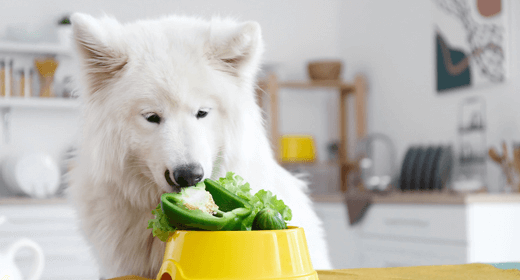
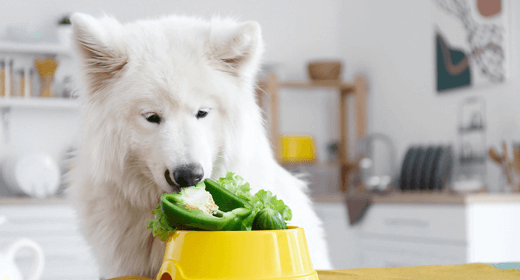
Fiber is important to your dog's health, providing bulk to move food through his intestinal tract. Some types of fiber can be fermented (broken down by bacteria) in the intestinal tract. This process creates short-chain fatty acids (SCFA), which are a key energy source for the cells lining the intestinal tract.
Most people are aware of fiber and its role in their diet. The beneficial effects of higher fiber levels in humans influence the way many people think about their own food—and their pets’ food. As a result, some pet-food manufacturers began to think like human nutritionists and make high-fiber diets for dogs. But high-fiber diets and the shorter digestive tracts of dogs don't always mix well. High fiber levels in dogs can cause digestive problems and interfere with proper nutrient absorption. Unlike humans, dogs are carnivorous, meaning their nutritional needs are better satisfied with meat rather than with plant materials.
For more than 60 years, pet nutritionists at IAMS™ have been studying diets to better meet the special nutritional needs of dogs. IAMS research shows that the optimal crude-fiber level for healthy dogs ranges from 1.4 to 3.5%. At these levels, nutrient digestibility is maximized.
An important characteristic of fiber is its fermentability, or how well it can be broken down by the bacteria that normally reside in the dog's intestine. This breakdown of dietary fiber produces SCFAs that provide energy to the cells lining the intestines. Different types of fiber vary in fermentability.
Fiber sources used in pet foods include cellulose, which is poorly fermentable; beet pulp, which is moderately fermentable; and gums and pectin, which can be highly fermentable.
Research has shown that moderate levels of moderately fermentable fiber, such as beet pulp, provide the benefits of energy for the intestinal lining and bulk without the negative effects of excessive stool or gas.
High levels of poorly fermentable fiber are used in some weight-reduction pet foods to dilute the calories in a serving. IAMS research found that this is not a good practice because high fiber levels can decrease the digestibility of other nutrients in the food and, therefore, can reduce the nutritional quality of the diet. You might also see more poop piles in the yard because of the indigestible fiber.
The key thing to remember about dietary fiber is that your dog's needs are not the same as yours. A moderate level of moderately fermentable fiber, such as beet pulp, provides proven nutritional benefits for dogs. Diets containing high levels of poorly fermentable fiber to dilute calorie content do not provide these nutritional benefits.
All IAMS products, including IAMS™ ProActive Health™ Adult MiniChunks, are formulated with optimal levels of moderately fermentable fiber to promote a healthy intestinal tract and enhance the well-being of your dog.
A product code is a series of numbers and letters printed on the outer package of each product that a manufacturer produces to provide information about when the product was made.
As part of the product code, products manufactured by The IAMS™ Company include a 'Best Used By' date, or the date at which the product is no longer considered fresh and should no longer be sold. This date is expressed in “ddmmyy” and “ddmmmyy” formats (line 1 below).
The second line represents company internal information for use in traceability and inventory control (line 2).
Depending upon the production line, pouch products might have code date information in a single or double line.
By recognizing and understanding these codes, customers can make sure they are receiving a fresh product.
Shelf life is the duration, measured in months, during which a product that is stored properly maintains its freshness. This means that if a product has a 16-month shelf life, it is fresh for up to 16 months from the date of manufacture.
The shelf life for our dry dog and cat foods is 16 months. All canned and pouch formulas have a shelf life of 24 months. Biscuits have a 12-month shelf life, and sauce formulas have a 16-month shelf life.
Unopened dry products are best stored off of the floor in a cool, dry place. Open bags of food should be stored in a clean, dry container with a tight seal. Dry products also might be frozen without loss of nutrients.
Opened wet products are best kept refrigerated in tightly sealed containers for no more than three days after the can has been opened. Wet products should not be frozen in unopened cans or pouches. However, wet foods can be frozen if removed from the container, packed in freezer containers and frozen immediately.