Enter a keyword below to search for articles and products.
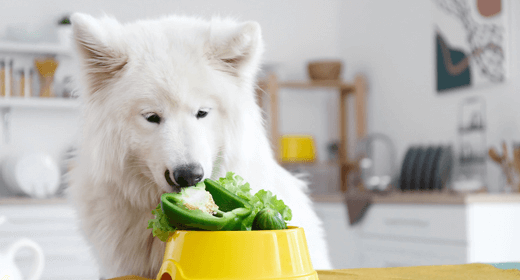
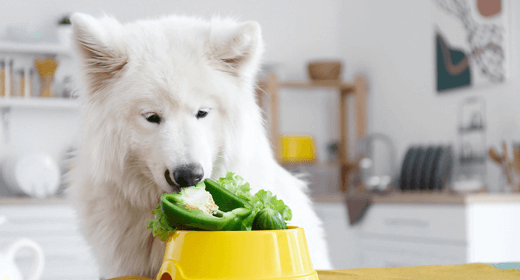
Fiber is important to your dog's health, providing bulk to move food through his intestinal tract. Some types of fiber can be fermented (broken down by bacteria) in the intestinal tract. This process creates short-chain fatty acids (SCFA), which are a key energy source for the cells lining the intestinal tract.
Most people are aware of fiber and its role in their diet. The beneficial effects of higher fiber levels in humans influence the way many people think about their own food—and their pets’ food. As a result, some pet-food manufacturers began to think like human nutritionists and make high-fiber diets for dogs. But high-fiber diets and the shorter digestive tracts of dogs don't always mix well. High fiber levels in dogs can cause digestive problems and interfere with proper nutrient absorption. Unlike humans, dogs are carnivorous, meaning their nutritional needs are better satisfied with meat rather than with plant materials.
For more than 60 years, pet nutritionists at IAMS™ have been studying diets to better meet the special nutritional needs of dogs. IAMS research shows that the optimal crude-fiber level for healthy dogs ranges from 1.4 to 3.5%. At these levels, nutrient digestibility is maximized.
An important characteristic of fiber is its fermentability, or how well it can be broken down by the bacteria that normally reside in the dog's intestine. This breakdown of dietary fiber produces SCFAs that provide energy to the cells lining the intestines. Different types of fiber vary in fermentability.
Fiber sources used in pet foods include cellulose, which is poorly fermentable; beet pulp, which is moderately fermentable; and gums and pectin, which can be highly fermentable.
Research has shown that moderate levels of moderately fermentable fiber, such as beet pulp, provide the benefits of energy for the intestinal lining and bulk without the negative effects of excessive stool or gas.
High levels of poorly fermentable fiber are used in some weight-reduction pet foods to dilute the calories in a serving. IAMS research found that this is not a good practice because high fiber levels can decrease the digestibility of other nutrients in the food and, therefore, can reduce the nutritional quality of the diet. You might also see more poop piles in the yard because of the indigestible fiber.
The key thing to remember about dietary fiber is that your dog's needs are not the same as yours. A moderate level of moderately fermentable fiber, such as beet pulp, provides proven nutritional benefits for dogs. Diets containing high levels of poorly fermentable fiber to dilute calorie content do not provide these nutritional benefits.
All IAMS products, including IAMS™ ProActive Health™ Adult MiniChunks, are formulated with optimal levels of moderately fermentable fiber to promote a healthy intestinal tract and enhance the well-being of your dog.


Nutrition is an important part of pet care, and food is one of the basic needs of a dog. So, we cannot go wrong when it comes to feeding our fur babies. And how would anyone mess it up? As humans, we are used to satisfying the nutritional needs of ourselves. How difficult could it possibly be to do the same for a dog? Well, thanks to the endless varieties of dog food available in the market, choosing the right kind of puppy food has become a challenge. But fret not! With this comprehensive feeding guide, you can plan a healthy and balanced diet for your new-born puppy. It also covers questions like what, when, and how often to feed a puppy.
Complete and balanced nutrition is critical for the healthy growth of your puppy. In fact, according to Dr. Saza Curaming, “A puppy grows about 12x faster than a human child. That’s why the first year of a dog’s life is a critical stage and this will dictate its further development. It is at this stage where you must constantly monitor its nutrition and feeding regimen.” So, let’s look at the food guide for the first year of a newborn pup:
As compared to adult dogs, puppies need a higher protein intake. It helps with muscle development and tissue repair. Hence, it is imperative to include protein-rich foods in their diet. While iron helps create red blood cells, calcium strengthens bones and teeth. As your puppy grows, it will start learning new things. And to ensure that your pooch can see and conceive new things, it needs DHA – an omega-3 fatty acid that supports healthy vision and brain development. You must also include prebiotics in its diet as your pet cannot have a healthy gut without it!
Give your dog the food that’s specifically formulated for its breed and age. Since small breed dogs have a tiny mouth, they require smaller kibbles. Moreover, large breed dogs have a slower metabolism; hence, they require fewer calories per kilogram of their bodyweight when compared to a small or medium breed dog.
At IAMS, we offer a range of puppy food that is loaded with essential nutrients like protein, vitamins, and minerals. Our food is scientifically formulated for puppies of all breed sizes. With IAMS, you make sure that your little pooch receives a balanced and complete meal.
Now that you know the nutritional requirements of a dog, let us check out the food items that are harmful for your pooch:
A fat puppy might not necessarily mean a healthy pet. The way childhood obesity often leads to medical complications in humans, an overweight puppy can also grow up to have health problems. So, make sure you monitor your furry friend’s calorie intake. This includes keeping an eye on the amount of treats you give your pup each day! Remember that treats are not the only way of rewarding a dog. You can make it feel loved and appreciated with praises, pats, and belly rubs as well.