Enter a keyword below to search for articles and products.
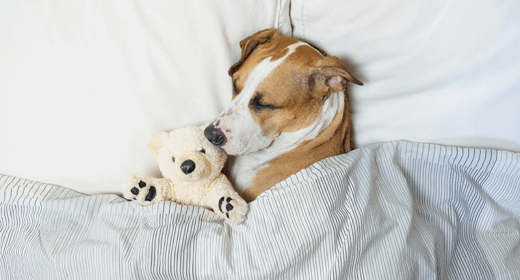
We may often envy our dogs for the kind of life they lead. Chilled, relaxed, and always well-rested. After sleeping like babies all night, dogs have the ability to nap throughout the day. You will find them basking under the sun, dozing off on the couch, or just napping next to your feet. When they do wake up after they’ve had their fat naps, they are full of energy and ready for some serious playtime.
Many animals, like dogs, sleep differently than we humans do. This is a very common reason for dog parents to wonder why my dog is always sleeping. Is my dog sleeping a lot or not enough? If you are wondering how much sleep do dogs need, there is more than one answer to this question. Just like how our sleep cycles change throughout our lives depending on our age, health, lifestyle, etc, a dog’s sleep cycle also changes depending on its age, health, and lifestyle. Keep reading to learn more about how long do dogs sleep, so it’s easier for you to understand your floof’s sleep patterns.
Dogs need a considerable amount of sleep; a lot more than we do. Additionally, carnivores like dogs sleep a lot more than herbivores since sleep is more dangerous for prey animals. The total number of hours a dog needs to sleep for varies on different factors such as its age, its health condition, and the kind of life it leads. Out of all these factors, age matters the most.
Dogs can sleep for around 12-14 hours each day, but puppies can clock in even more hours. This is because the body needs a lot of rest and repair during the first few months of life. Let’s take a look at how age affects the sleep cycle of dogs.
Puppies need to sleep for as long as their body needs to facilitate growth and repair. It is completely normal if your puppy sleeps for most of the day. In fact, puppies tend to sleep more throughout the day and less through the night.
Most adult dogs tend to sleep for anywhere between 8 to 13 hours, averaging around 11 hours each day. Yes, that’s a lot but that’s also a charm for these cute, cuddly floofs. Adult dogs tend to sleep for longer during the night depending on their and their pet parent’s schedule. However, napping for them is equally important. That being said, sleeping for a few hours during the day is absolutely normal.
Senior dogs and middle-aged dogs sleep as much as puppies. They tend to not wake up through the night and nap for a considerable number of hours throughout the day. These hours of sleep make sure that their body is well rested and recovering well as their body continues to age.
We now know that dogs, on average, can sleep for 15 hours a day irrespective of their age. However, every dog is different and will stick to a different routine which is okay. As a pet parent, you will soon understand your floof’s sleeping cycle and how its body functions.
If you do start worrying about your floof sleeping for too long, do not hesitate to contact your vet. It is always better to clear your doubts and take your furry friend to the doctor for a check-up and be sure. Another cause for concern that should be kept in mind is your dog sleeping for longer than usual. This could be a sign of underlying causes such as diabetes, dog depression, anxiety, and more. This is why a visit to the vet whenever you are worried is highly recommended.
There could be many reasons as to why your dog is sleeping so much. Our first thought is always an underlying disease that should be checked out by the vet. While this is highly recommended and also very common, many other reasons can make your dog sleep for very long.
If you’re wondering “Why is my dog always sleeping?”, the answer could be as simple as boredom. Sometimes dogs will resort to sleeping simply because they do not have anything to do. Apart from boredom, stress and anxiety are also major reasons for dogs sleeping too much. If your dog is anxious, you will notice it being lethargic and falling asleep often. The best way to combat this is to establish a routine and include some wholesome playtime.
Your dog can be susceptible to hyperglycaemia if its body is unable to produce the minimum amount of insulin needed. Certain dog breeds are at a higher risk of this disease as compared to other breeds. Visit your vet to diagnose conditions like this early and do the needful.
Viral infections in dogs are highly contagious and can affect your floof’s body greatly. Because of viral infections, your floof’s body will be unable to absorb any nutrients and will leave it dehydrated. Other than that, your floof will also suffer from a lack of protein and recovering from this disease will take some time. Resort to early puppy vaccination to keep occurrences as such at bay.
This infection caused by bacteria is highly contagious and your dog can get this disease easily through direct contact with urine from other dogs. This disease can also be passed on by humans. Again, this disease can drain your floof’s body of energy resulting in it falling asleep way too often.
Poisoning is a reason that should not be neglected by dog owners. If your dog is not trained and will eat anything palatable, it is at risk of poisoning itself. Other than that, many human foods are also poisonous to dogs. Avocados, spices, coffee, cheese, and more are foods that should not be fed to dogs, especially when you're pampering your floof.
Now that you know how much sleep do dogs need on average, you can notice any sudden changes in your dog’s sleep patterns. See a vet immediately if you suspect any illness or disease.
A dog’s sleep cycle depends on its age and lifestyle. For example, it is very normal for a puppy to sleep for around 20 hours a day since their bodies need to rest and repair.
Sometimes, dogs keep sleeping all day because they are bored. The best way to help your dogs in situations as such is to establish a routine that also includes some exciting playtime.
Judging by how much sleep do dogs need, a dog may be stressed if it is sleeping for way too long as compared to how much it should. Another sign of stress in dogs is lethargy.



Not all small dogs have the same nutritional needs. Giving your dog a food specially formulated for her size and activity level is the easiest way to make sure you’re providing complete and balanced nutrition. Here’s how to provide the right nutrition for your small dog.
Small adult dogs require a food that offers complete nutrients essential for health and vitality. Here’s what to look for:
These ingredients are the keys to nutrition whether you feed dry or wet dog food or give your dog treats.
Small dogs have small mouths and stomachs. You may want to feed your dog a formula with a small bite size for easy chewing. A nutrient-dense food will help make sure she’s absorbing essential nutrients even though her stomach can only accommodate what seems like a small volume of food.
When choosing a food for your small-breed dog, also ask:
Special conditions like these dramatically affect your dog’s nutritional demands.
Less-active dogs and dogs who have been neutered or spayed are prone to weight gain. Controlling your dog’s weight is an important step toward protecting against complications of excess weight, such as diabetes or joint health problems. If you use a weight-control food, look for these ingredients:
Starting in the seventh week of her pregnancy, a mother dog will need to increase her energy intake up to 50% by the time she gives birth and increase it even more when she starts nursing her puppies. Because she may lose her appetite at times, it’s important that she eats a nutrient-dense food. A complete, balanced small-breed puppy formula can give her the extra nutrients she needs.
Unlike larger dogs that are considered mature at age 5, your small dog can remain on an adult diet until age 7. In fact, small-breed dogs tend to live longer and don’t experience age-related changes as early as bigger dogs. However, it is important to make a proactive transition to a specially formulated mature diet, such as IAMS™ ProActive Health™ Mature Adult Small & Toy Breed, so you can help keep your dog healthy and active for years to come.