Enter a keyword below to search for articles and products.


As your dog matures, his body functions change. He might have decreased immune-system function, deterioration of skin and coat quality, and more frequent intestinal problems. So it makes sense that what a mature dog eats might also need to change.
Throughout a dog's life, a process called peroxidation occurs. This is a normal process the body uses to destroy cells that outlive their usefulness and to kill germs and parasites, but this process also can destroy or damage healthy cells. As a dog ages, the damage caused by peroxidation accumulates and, in turn, increases the risk of certain problems such as infections.
Antioxidants are naturally occurring components in the body (but also can be acquired through diet). They help maintain overall health by neutralizing the peroxidation process of cellular molecules.
Research sponsored by IAMS™ found that dogs fed a diet rich in antioxidants such as vitamin E had improved immune responses and vaccine recognition. This might be especially important for mature/senior dogs, because IAMS research has found that, as dogs age, immune responses can decrease.
Eating a complete and balanced diet with omega-3 fatty acids, such as those found in vitamin-rich fish oils, also helps rejuvenate dry skin and develop a healthy, lustrous coat.
Aging dogs might have higher numbers of unfavorable bacteria and lower numbers of beneficial bacteria in their intestines, which can result in clinical signs of gastrointestinal problems (such as diarrhea). A diet with a moderately fermentable fiber source such as beet pulp can help maintain intestinal health. Beet pulp provides energy for the cells lining the intestine and promotes proper stool formation.
Different dogs show signs of aging at different times, and much of this variation is associated with size. Larger dogs generally appear mature/senior sooner than smaller dogs. The table below can show you when your dog should start a mature diet with a food such as IAMS ProActive Health™ Mature Adult.
Dog Weight and Transition to Mature/Senior Foods
| Weight Range | Age to Begin Transition |
|---|---|
| More than 90 lbs | 5 years |
| 51 to 90 lbs | 6 years |
| 21 to 50 lbs | 7 years |
| Up to 20 lbs | 7 years |
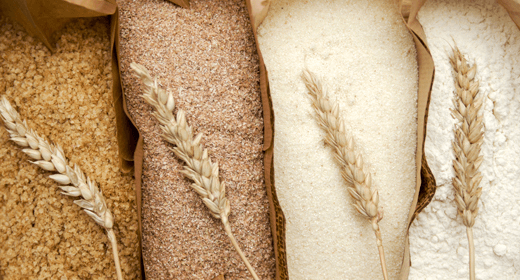
Wheat is a grain used as a high-quality carbohydrate source in dry dog foods and biscuits. It provides energy for daily activity, as well as processing characteristics for the food. IAMS™ research has shown that including wheat in a complete and balanced diet results in a moderate glycemic response in dogs, which is lower, in general, than the response observed when a rice-based diet was fed. 1,2
A common misconception is that feeding wheat causes food allergies. The facts are:
Gluten (a protein found in wheat) is responsible for wheat-sensitive enteropathy, occasionally found in Irish Setters from the United Kingdom. Gluten enteropathy of Irish Setters is a malabsorption syndrome, which responds to the removal of wheat (gluten) from the diet. This condition is very rare, and the reason some dogs develop it is not yet clear.
1 Sunvold GD. “The role of novel nutrients in managing obesity.” In: Recent Advances in Canine and Feline Nutrition, Vol II: 1998 IAMS Nutrition Symposium Proceedings. Carey DP, Norton SA, Bolser SM, eds. Wilmington, OH: Orange Frazer Press, 1998; 123–133.
2 Bouchard GF. “Effect of dietary carbohydrate source on posprandial plasma glucose and insulin concentration in cats.” In: Recent Advances in Canine and Feline Nutrition, Vol III: 2000 IAMS Nutrition Symposium Proceedings. Reinhart GA, Carey DP eds. Wilmington, OH: Orange Frazer Press, 2000; 91–101.
3 Jeffers JG. “Responses of dogs with food allergies to a single-ingredient dietary provocation.” J Am Vet Med Assoc. 1996, vol 209(3): 608–611.