Enter a keyword below to search for articles and products.


Keeping your puppy’s skin and coat healthy is as easy as 1-2-omega-3. Feeding studies have shown that dogs thrive on high-quality animal proteins from chicken, fish, lamb and eggs. IAMS™ ProActive Health™ Smart Puppy Original and other IAMS formulas are made with these highly digestible proteins, which promote excellent skin and coat condition and enhance your dog’s overall health and well-being. When your dog’s coat looks good, the rest of his body will likely be well nourished, too.
Learn more about two important nutrients that can maintain your puppy’s skin and coat health.
Fat plays a key role in keeping your puppy’s skin and coat in top condition. Fat not only provides energy, but it’s also a source of essential fatty acids that are necessary for the skin’s healthy structure. Fatty acids in the diet keep the skin moist and supple. They also contribute to a thick, lustrous and healthy coat. The lack of or imbalance of fatty acids can cause dry, scaly skin and brittle hair. A diet with vitamin-rich fish oils is vital to your puppy’s coat health and appearance.
Although there are many kinds of fatty acids, a few are important to coat health and appearance:
An appropriate balance of omega-6 and omega-3 fatty acids helps maintain your dog’s healthy skin and coat. An optimal range of omega-6 to omega-3 fatty-acid ratios is between 5:1 and 10:1 to enhance skin and coat quality and help nutritionally manage skin and coat conditions.
DHA (docosahexaenoic acid) is a key nutrient found naturally in breast milk and is important for a baby’s neural development. And just like a baby, a puppy’s ability to learn depends on healthy brain development.
At 6 weeks, a puppy's brain mass is approximately 70% developed. At this stage and in the months ahead, feeding your puppy a diet rich in DHA can help support neural development. Premium puppy foods such as IAMS™ ProActive Health™ Smart Puppy provide DHA in their formulas.

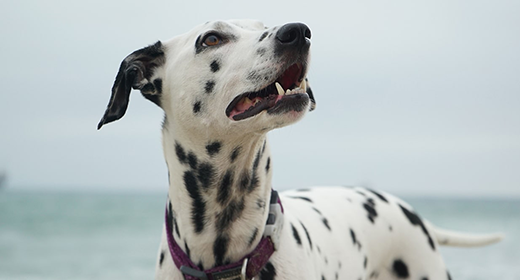
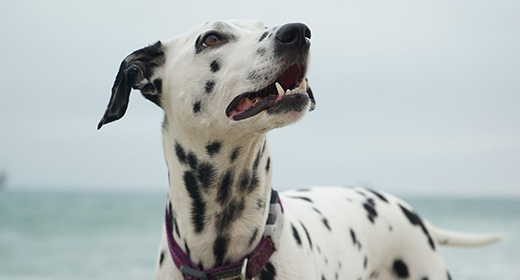
Some of the best indicators of your dog's health are its skin and coat conditions. A healthy dog coat should be shiny and smooth, not rough or brittle. When it comes to healthy skin, your dog's skin should be soft and smooth, not greasy or flaky. Good nutrition is one of the main factors in maintaining your dog’s health in terms of a luscious coat and soft skin. Apart from that, your dog’s coat and skin can also be taken care of through regular grooming and skincare routines that will help keep its hair free of tangles and its skin free of any irritation.
If you think that achieving healthy skin and healthy coat in dogs is difficult, it’s time for you to learn more about dog health and grooming. Let’s explore more about how you can achieve a healthy dog coat and skin for your floof.
The first thing that any pet parent thinks of when it comes to maintaining their dog’s skin and coat health is grooming. While grooming plays a significant role in making sure that your dog has a shiny coat and soft skin, health plays a bigger part in ensuring your floof’s appearance.
If you have been grooming your dog well and are still wondering why its coat and skin are not appearing the way they should, chances are that there is an internal issue. A shiny coat and supple skin on the outside start with a healthy dog on the inside. If your dog has flaky, bumpy, dull, or dry skin/coat, it could be an indicator that something is wrong. The first thing you need to do is book an appointment with your vet and cross out any underlying issues.
The skin is the largest organ of any animal's body. For dogs, most of their skin is covered with hair that sheds regularly or is constantly growing, in non-shedding breeds. Just like how we require a balanced diet full of high-quality digest table food types to keep our skin and hair in a healthy state, dogs also need to maintain their diet and make sure that their body is receiving the right amount of calories each day to maintain energy levels. If a dog is not eating well or is eating poor-quality food, its body will take longer to eliminate the waste products and cause the kidneys and liver to work twice as hard.
That being said, good nutrition is key to a healthy dog coat and skin. A dog that meets its dietary needs every day will boast soft, supple skin, and luscious, glowing hair.
Many pet parents struggle with maintaining their dog's skin and find it to be one of the most difficult tasks. In reality, achieving goals as such is fairly easy, provided you feed your dog the right nutrients and make sure that its diet meets its bodily requirements. Here are a few things you can do to maintain a healthy dog coat and skin:
Your dog needs to maintain a complete and balanced diet to achieve healthy skin and a glossy coat. Proteins, fats, carbohydrates, minerals, and vitamins need to be fed to your dog in balanced ratios. It is very important for dogs to meet their daily calorie intake so that they have enough energy to facilitate new hair growth and skin cell turnover. If your dog's diet is not easily digestible or contains poor-quality ingredients, it may not be able to create enough energy through its diet. Make sure that everything you feed your dog contains high-quality ingredients and does not pose a risk to your dog's health.
There are so many supplements available in the market today. While you may get confused between jars and bags of supplements promoted for healthy coat growth in dogs, the majority of these products contain a source of omega-3 fatty acids combined with a range of other ingredients. Omega-3 fatty acids have scientifically proven to be one of the most beneficial supplements that you can give your dog for a glossy coat and smooth skin. Omega-3 fatty acids are not just effective anti-inflammatory agents but are also capable of bulking up your dog’s skin’s natural fatty acid barrier to add that extra shine.
Bathing your dog is extremely important as it will remove any dust, debris, dirt, and odour from its skin and coat. If there are any allergens on your dog's skin, a good bath is the solution to this irritating problem. Generally, dogs should be bathed every 2 to 4 weeks depending on their breed's needs. If your vet has advised a different routine, make sure you follow that. It is best not to bathe your dog too much because that can result in flaky skin and can dry out your dog's coat. If your dog has any allergies or does not react well to a dog shampoo or soap, consult your vet and find the right products for your floof.
Dogs that suffer from allergies experience inflammation in their skin that can cause redness and itchiness. This makes them itch and scratch which ruptures their skin barrier, allowing other infections to enter your floof’s body. Unfortunately, allergies cannot be cured and can only be treated. For this reason, it’s important to know how to manage your dog's allergies by consulting a wet.
Fleas and ticks are the most common parasite irritants that will affect your dog's skin at some point in its life. These parasites can cause intense scratching, chewing, and biting of the skin. These acts of self-inflicted trauma can lead to tears in the skin barrier, leaving your dog with crusty, irritable, and red skin. Additionally, some fleas and ticks carry illnesses that can be fatal. It is best to keep your dogs protected against these parasites all around by consulting a vet and doing the needful.
Maintaining overall health for your dog to achieve a shiny coat and soft skin is extremely important. Make sure your dog is being fed a balanced diet and the right nutrients. it is also important for your dog to have a good exercise routine so that it is just not lazing around the house. A dog that is well rested, well fed, and receiving the right nutrients is set to flaunt healthy dog skin and coat.
It is imperative that pet parents keep good food for dog skin in mind and also administer nutrients that aid in a shiny, glossy coat. Now that you know what you need to do as a responsible pet parent, you are all set to give your floof its best life.