Enter a keyword below to search for articles and products.


A: My personal preference is not to use food at all. When I have trained dogs for obedience, I have always used the verbal praise-reward method. It works well, especially with some dogs who are not motivated by food rewards.
Many people do use treat-based training with success, but I don't recommend offering table scraps as the treat. Giving a dog people food—in training or just as a general reward—may give the dog the idea that such food is fair game. It might encourage your pet to steal food from the table or from people, especially kids or guests.
In addition, many human foods can be toxic to dogs. These include chocolate, grapes, raisins, macadamia nuts, and xylitol (a sweetener often used in gum, candy, and baked goods).
As an alternative to table scraps, you could train your dog with snacks that are tasty, low in fat, and commercially prepared for training. But keep in mind that soft chew snacks may be high in sugar, which is bad for dental health. When shopping for treats, read package labels and choose premium varieties that list meat as the first ingredient.
Use only small amounts for training purposes—treats should not interfere with the consistency of a normal diet or greatly affect the caloric intake for the size and age of the dog. The training sessions should be short in length and repeated several times throughout the day. For young dogs, the training period should be no longer than five minutes.
Finally, the most important training tip is to keep it positive. If you're getting frustrated with your puppy's naturally short attention span, take a break. Strive to end the session on a positive note so your pet will be eager for the next time.
Janet Tobiassen, DVM, a veterinarian based in the state of Washington, has been practicing and writing about vet medicine since 1999. She started training dogs at age 12, through 4-H, and continued pet therapy and obedience training in veterinary school and beyond.

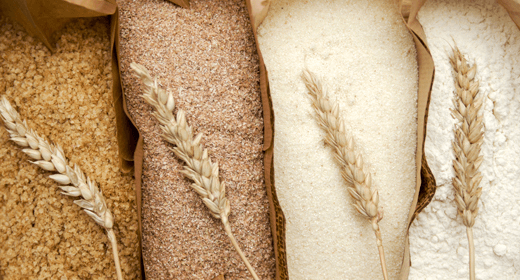
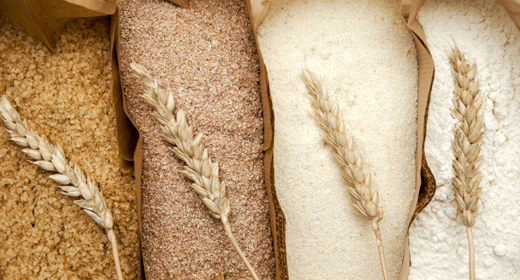
Wheat is a grain used as a high-quality carbohydrate source in dry dog foods and biscuits. It provides energy for daily activity, as well as processing characteristics for the food. IAMS™ research has shown that including wheat in a complete and balanced diet results in a moderate glycemic response in dogs, which is lower, in general, than the response observed when a rice-based diet was fed. 1,2
A common misconception is that feeding wheat causes food allergies. The facts are:
Gluten (a protein found in wheat) is responsible for wheat-sensitive enteropathy, occasionally found in Irish Setters from the United Kingdom. Gluten enteropathy of Irish Setters is a malabsorption syndrome, which responds to the removal of wheat (gluten) from the diet. This condition is very rare, and the reason some dogs develop it is not yet clear.
1 Sunvold GD. “The role of novel nutrients in managing obesity.” In: Recent Advances in Canine and Feline Nutrition, Vol II: 1998 IAMS Nutrition Symposium Proceedings. Carey DP, Norton SA, Bolser SM, eds. Wilmington, OH: Orange Frazer Press, 1998; 123–133.
2 Bouchard GF. “Effect of dietary carbohydrate source on posprandial plasma glucose and insulin concentration in cats.” In: Recent Advances in Canine and Feline Nutrition, Vol III: 2000 IAMS Nutrition Symposium Proceedings. Reinhart GA, Carey DP eds. Wilmington, OH: Orange Frazer Press, 2000; 91–101.
3 Jeffers JG. “Responses of dogs with food allergies to a single-ingredient dietary provocation.” J Am Vet Med Assoc. 1996, vol 209(3): 608–611.