Enter a keyword below to search for articles and products.
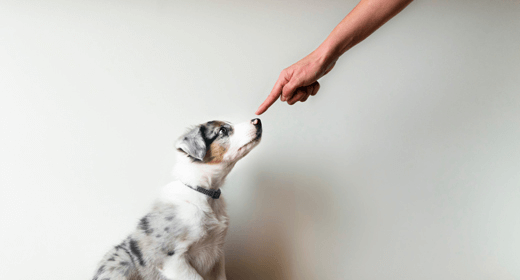
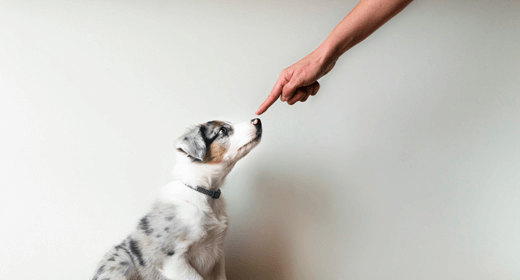
A new puppy is wonderful in pretty much every way, at least until they start having accidents around your apartment or house. But do not fear, Expert Pet Trainer Kathy Santo has all the answers. Watch as she takes you through the basics on everything from establishing a routine to rewarding your puppy when they eliminate outdoors.
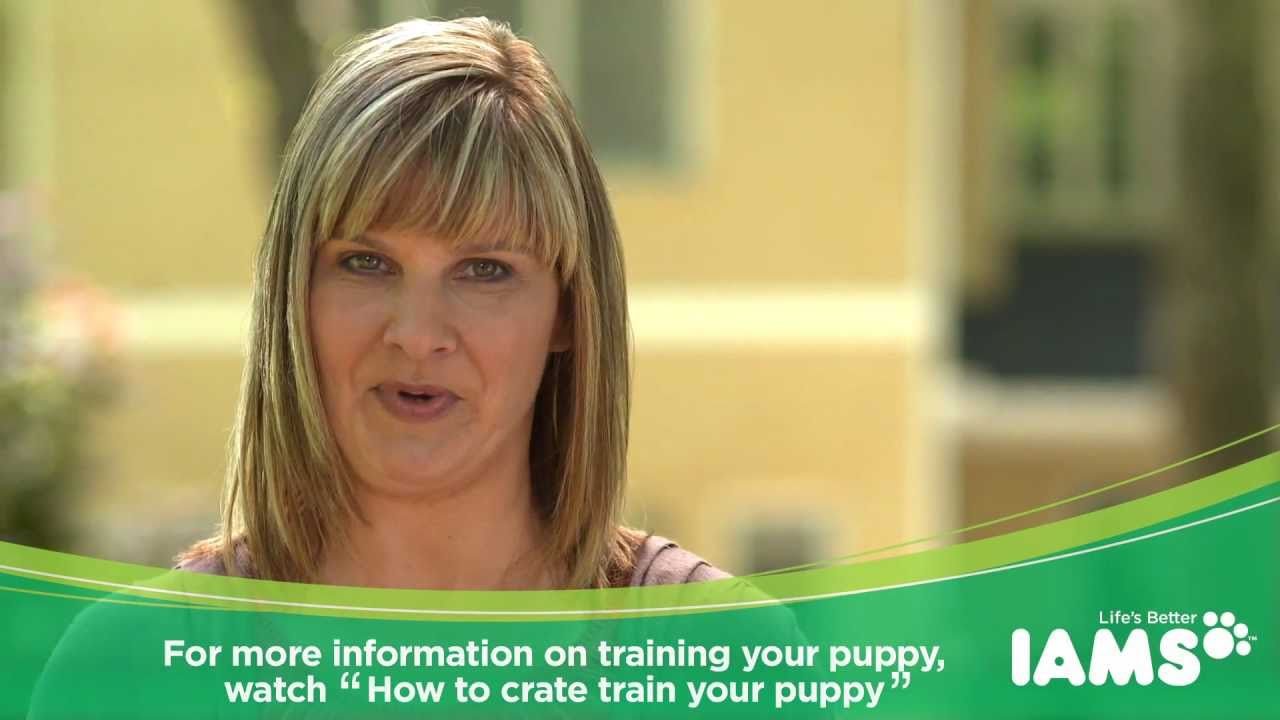
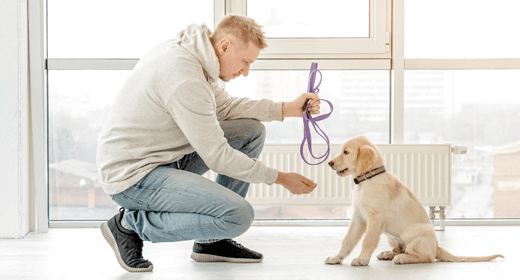
House training your puppy requires more than a stack of old newspapers. It calls for patience, commitment, and above all, consistency. Hi, I'm Kathy Santo with IAMS, and today we're going to talk about how to house train your puppy. A trusting and consistent relationship is fundamental to successful house trading. The more consistent you are, the faster your puppy will learn. House training a puppy can take several weeks, and sometimes longer with smaller breeds. The first step to house training your puppy is to establish a routine. Puppies do best on a regular schedule, because it teaches them that there are times to eat, times to play, and times to potty. As a general rule, a puppy can control his bladder about an hour for every month of age. So if your puppy is only three months old, he can probably only hold it for about three hours, if not less. Make sure to take him right out after he wakes up, during and after play time, and after eating or drinking, because these are times he'd most likely to have to go. If you work, and are unable to take your puppy outside as often as needed, you could hire a dog walker to give your puppy his necessary breaks. I recommend picking a specific bathroom spot outside, and always taking him there first when he's on a leash. While your puppy is going, say something like, 'go potty,' so that you can eventually use that phrase to remind him what to do. You should take him out for a walk or play time after he's gone potty, or he might just learn to hold it to keep you outside. Reward your puppy every time he goes potty outdoors with praise or a treat, but make sure to do so immediately, before he goes back into the house. Rewarding correct behavior is the best way to teach your puppy. Be careful not to reward your puppy until he's completely finished, or he may forget to finish up outside, and then have an accident inside. And remember, what goes into a puppy on a schedule comes out of a puppy on a schedule. So always take your puppy out after feeding. Try picking up your puppy's water dish about two and a half hours before bedtime, so he won't have as much water to try and hold overnight. If you keep a consistent schedule, your puppy could be house trained by the time he's five to six months old. But don't be discouraged if it takes your puppy longer, or has an occasional accident. Many factors, including breed of dog, consistency, and temperament can contribute to a longer training period. If you feel that there's little to no progress, consult with your veterinarian to be sure that a medical issue, such as a bladder infection, isn't the culprit. Supervision in the beginning is critical. Exercise pens are extremely helpful while house training. Keeping your puppy in a small space within eyesight will allow you to notice and react when they start showing the signs of needing to eliminate. Those signs can be barking, scratching at the door, squatting, sniffing, or circling. If you're unable to monitor your puppy, you can confine him to an area small enough so that he won't want to eliminate there. A space just large enough for him to lay down with a couple extra inches is just fine. Many people choose to combine with a crate, which can be very helpful for house training your young dog. For more information on crate training, watch 'How To Crate Train Your Puppy.' I'm Kathy Santo with IAMS, and I hope that you found this helpful as you welcome your new addition to your family.
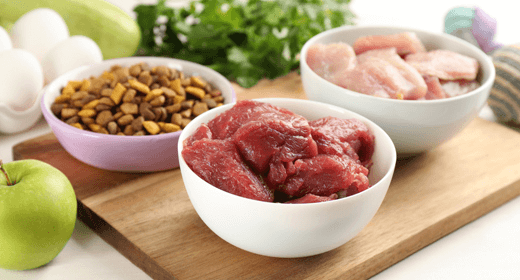
Nutrients are divided into subcategories: protein, carbohydrates, fats, vitamins and minerals, and water. Regular brushing and professional cleaning can keep your dog’s teeth healthy and gleaming. Giving your pet appropriate toys to chew prevents fractures.
Common dog food protein sources include meat, poultry, fish, and some plant ingredients, such as corn gluten and soybean meal.
Protein is best known for supplying amino acids to build hair, skin, nails, muscles, tendons, ligaments, and cartilage. It also plays a main role in hormone production.
Dogs, best fed as carnivores, require essential amino acids that are not all found in the proper balance in single plant protein sources such as soybean meal.
Common carbohydrate sources are plants and grains. Carbohydrates, also categorized as starches (sugars) and fibers, provide energy and bulk, respectively.
Starches are made up of various types of sugar, such as glucose or fructose. Through digestion, dogs can easily convert sugar into usable energy.
Fiber may or may not be fermented or broken down into short-chain fatty acids by bacteria in a dog’s intestines. Highly fermentable fiber sources, such as vegetable gums, provide high amounts of short-chain fatty acids. Moderately fermentable fibers, such as beet pulp, provide short-chain fatty acids and bulk for moving waste. Slightly fermentable fibers, such as cellulose, provide mainly bulk for moving waste through the digestive tract and only a few short-chain fatty acids.
Water is the single most important nutrient for the body. Without it, the body cannot transport nutrients, digest nutrients for energy, regulate temperature, or eliminate water.
Fats are found in meats, poultry, fish, and plant oils. Fat, for all its bad press, fulfills many vital body functions. Animal cell membranes are made of fat. Fat also helps maintain body temperature, control inflammation, and more. Fat is the primary form of stored energy in the body, providing twice as much energy as carbohydrates or proteins.
Fats also have been shown to be important in blood clotting and managing inflammation.
Vitamins are responsible for aiding functions such as bone growth, blood clotting, energy production, and oxidant protection. Vitamins A, D, E, and K require fat for absorption into the body, while vitamins such as the B-complex vitamins and vitamin C need water to be absorbed into the body.
Minerals provide skeletal support and aid in nerve transmission and muscle contractions.