Enter a keyword below to search for articles and products.
When deciding which pet food is right for your pet, consider these three factors:
Puppies should be fed three times a day from weaning (3 to 6 weeks) to 4 months of age. After 4 months, they should be fed twice a day. Most dogs should continue to be fed twice a day throughout their life, although some pets do well with one feeding.
The answer to this question depends on your dog’s age, size, and activity level. Feeding guidelines, which list the daily-recommended portion, are included on all IAMS™ packages. Start feeding your dog with this amount and adjust according to its needs. Remember to divide the portion accordingly if you feed more than once a day.
The amount you need to feed your puppy depends on 3 main factors — breed, weight, and age. However, you can take a look at this general guideline that we recommend for puppies:
Puppy | Adult Target Weight (KG) | Recommended Daily Feeding (g/day) | ||||
<3 months 3-6 months 6-9 months 9-12 months 12-18 months | ||||||
Toy breed | 1-3 | 15-72 | 32-83 | 37-83 | ||
3-5 | 33-106 | 72-121 | 83-121 | |||
Small breed (25-50) | 5-8 | 48-151 | 106-172 | 111-172 | 111-170 | Transition to IAMSTMPROACTIVE HEALTHTM ADULT DOG |
8-10 | 69-178 | 151-204 | 170-204 | 170-201 | ||
Medium breed | 10-20 | 82-299 | 178-343 | 201-343 | 201-339 | |
20-25 | 137-346 | 339-404 | 339-404 | 339-404 | ||
Large breed | 25-40 | 136-492 | 346-575 | 404-575 | 396-575 | 396-563 |
40-50 | 191-509 | 493-675 | 575-681 | 563-681 | 553-676 |
This diet contains 390 kilocalories of metabolizable energy (ME) per 100 gms. Remember to have clean, fresh water available for your dog at all times.
You should not change your puppy’s food to adult abruptly. Giving your pet time to acclimatise to the new taste of adult food is very important. Also, if you suddenly switch your pup’s food, it can cause digestive problems. Go through this schedule that will help you understand how much to feed your dog and transition your dog’s diet from puppy food to adult food:
If you are wondering how much to feed your puppy by weight and age, check out the weight and age-wise breakdown on when to transition your puppy’s diet to adult food:
Weight range | Age to begin transition |
Small breeds that weigh < 9.07 kgs | 9 and 12 months of age |
Medium breeds that weigh between 9.07 and 22.6 kgs | 12 to 14months of age |
Large breeds that weigh more than 22.6 kgs | 12 to 24 months of age |
While transitioning from adult dog food to senior dog food, it is important to factor in your dog’s weight. Take a look at this weight table to know when to transition your dog’s food from adult to senior:
Weight Range | Age to Begin Transition |
More than 90 lbs | 5 years |
51 to 90 lbs | 6 years |
21 to 50 lbs | 7 years |
Up to 20 lbs | 7 years |
When changing your dog’s diet, it’s important to slowly introduce new food. Start by offering your dog’s daily portion in a ratio of 25% new food to 75% current food. During the next three days, gradually increase the amount of new food and decrease the amount of the old food.
If your dog has gained unhealthy weight, make sure to cut down on fats along with increasing regular exercise. We recommend you browse through IAMS™ products and choose dog foods that are low on fat. How much food to feed your dog if they are overweight, is another major concern. You can consult your vet to understand the right amount of food your furry friend needs for each meal.
It’s important to understand that your dog’s nutritional needs change during pregnancy and ensure you feed her nutrition-rich food. For pregnant dogs, we recommend IAMS™ Puppy food as it’s full of proteins that can help your pregnant dog during the gestation period and improve the quality of milk to nourish her puppies post-delivery.
Wet food is an excellent treat that can be fed alone or mixed with dry food. Although IAMS wet dog foods are nutritionally complete and balanced, it is not necessary to offer wet food at every feeding. Our dry foods are formulated with high-quality protein sources such as chicken, lamb or fish, and contain all the essential nutrients pets need. The crunchy texture of dry food also promotes healthy teeth and gums, and aids in overall good oral hygiene. In addition, some of our dry dog foods contain a dental enhancement to help block tartar buildup on teeth during and after meals.

No. Unlike humans, dogs have fewer taste receptors. Hence, they won’t feel the urge to eat something different every day. In fact, if you find something that suits your dog’s overall health and preferences, stick to that food.
Soaking dry food will ease up the initial job of the digestive enzymes. While water will not change its nutritional value, the food should be eaten relatively soon. Moreover, ensure that the leftover portion is discarded to avoid spoilage. We recommend providing your dog with IAMS™ dry food because it is beneficial to your dog’s dental health as well..
No. Cats and dogs have different nutritional requirements. Moreover, cat foods are made with higher fat levels, which can be harmful to a dog. While it is okay for dogs and cats to sniff and lick some food from each other’s bowl, you shouldn’t let dogs eat cat food.
We recommend feeding your dog approximately two to four small biscuits per cup of food. Keep in mind that when you add biscuits to your dog’s daily diet, this increases its daily calorie intake, so you should reduce the amount of food you feed. Check the calorie content of the biscuit since biscuits vary in size and formulation.
Since IAMS™ dog foods are nutritionally complete and balanced, adding more vitamins, minerals or oils can disrupt the balance our dog food provides. The reason why you provide your dog with a high-quality product is that it has been developed to offer nourishment in proper ratios and ensure optimal nutrition. Hence, nothing needs to be added
Protein is one of the essential elements that should be a part of your dog’s diet. Including protein in your dog’s diet will strengthen its muscles, ligaments, and cartilages. A protein-rich food also brings about a healthy shine to your dog’s coat!
It is important to maintain a feeding schedule for dogs so that they are conditioned to expect food at that time and avoid irregular snacking in between.
You should never feed your dog home-baked goods, candy, gum, chocolate, limes, onion, and grapes. They can harm your dog’s digestive tract and cause infections as well.
IAMS™ dog food is full of key nutrients that your dog needs for its healthy growth. The basic ingredients in our food include chicken, fish oil, beet pulp, wholesome grains, and natural prebiotic.
Follow our blogs to know more about pet nutrition and dog food diet. Feel free to contact us here in case of any queries.
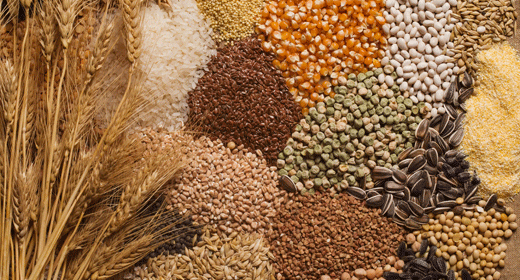
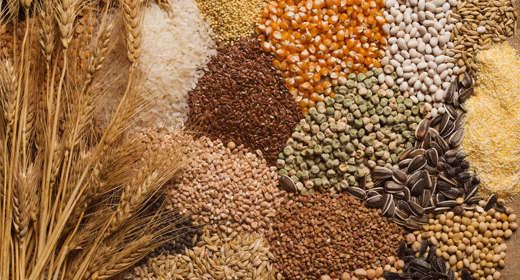
IAMS research has shown that some dog-food products are best formulated using a combination of carbohydrate sources. All IAMS dog foods are formulated precisely to meet the nutritional needs of your dog in his life stage. Such a combination offers optimal digestibility and helps maintain energy levels.
Our dog foods contain a variety of carbohydrate ingredients:
Barley: IAMS uses ground whole-grain barley that's cooked at high temperatures and finely ground in our dry dog-food formulas as part of our patented carbohydrate blend.
Corn: IAMS uses high-quality corn kernels that have been finely ground to break up the outside covering of each kernel, and then cooked at high temperatures to increase digestibility.
Grain sorghum: Also called milo, it is cracked, finely ground, and cooked before it is added to our dry dog foods. It is another carbohydrate source in our patented carbohydrate blend.
Rice flour: Our foods contain small kernels of white rice that have been separated from the larger kernels of milled rice, ground, and cooked at high temperatures to optimize digestibility.
Wheat: This is another high-quality carbohydrate source. In our biscuits, the wheat is an excellent, palatable carbohydrate source and adds a firm texture to the biscuit during the baking process.
Highly digestible diets are an important factor in the well-being of your dog. They deliver more essential nutrients more efficiently, so there is less waste.
Innovative and patented research by IAMS scientists has found that when the complex-carbohydrate sources grain sorghum and barley are used in a dog's diet, their breakdown is enhanced at another level.
These carbohydrate sources are all highly digestible, meaning your dog's body will still metabolize a high percentage of each for energy. What's unique about these grains is that they break down slowly and evenly, providing a stable source of energy.
The slow, even breakdown of grain sorghum, corn, and barley results in moderate, stable blood glucose levels after a meal. By minimizing swings in blood glucose, diets containing such a blend supply sustained energy. IAMS holds a patent on using grain sorghum and barley in a blend for dogs.