IAMS SG
cat article detail banner
cat article detail banner mobile

adp_description_block82
Tips on How To Feed Your Cat

  • Share

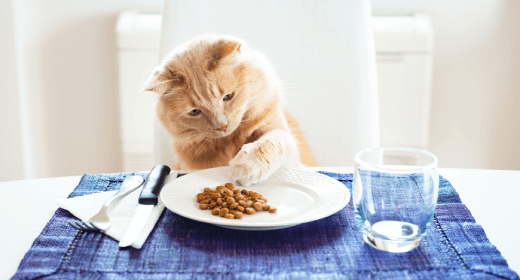
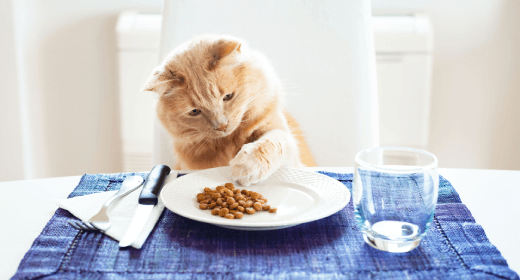
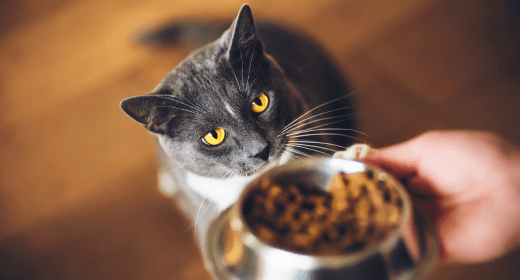
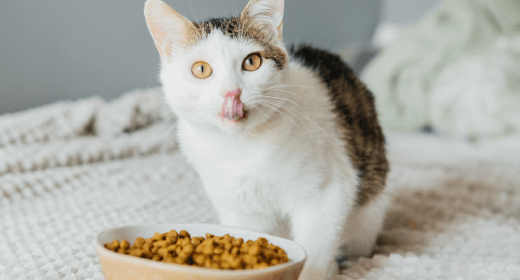
Compared to humans, your cat needs a high-fat, high-protein diet along with other important nutrients. Cats usually eat many small meals throughout the day, so they easily adopt a free choice feeding schedule to maintain their normal body weight. Dry foods, such as IAMS™ PROACTIVE HEALTH™ Healthy Adult with Chicken, are best suited for free choice feeding because they stay fresh for a longer period.

Tips on How To Feed Your Cat


Nutritional Building Blocks

Cats need nutrients from animal-based protein sources. Providing the vitamins, minerals, proteins, and other components found in a portion of complete and balanced pet food can help your cat live a long and healthy life. It is important to avoid supplementing your cat's diet, as doing so may lead to a variety of health problems.

When selecting cat food, look for ones that offer the following nutrients:

  • Animal protein from meat, poultry, fish, or egg sources to maintain strong muscular structure, vital organs, antibodies, and more.
  • Taurine, an amino acid, found in meat sources such as chicken and fish, but not in plant proteins, to maintain healthy eyes, prevent heart disease. It also promotes healthy reproduction, fetal growth, and development.
  • Essential vitamins and minerals such as vitamin A, which can be found pre-formed only in animal tissues, and vitamin E to help support the immune system.
  • A precise balance of fatty acids to help promote excellent skin and coat health.
  • A fiber source, such as beet pulp, that will help maintain your cat's digestive system health.
 

Special Dietary Needs

Special Dietary Needs

Pregnant or Lactating Cats

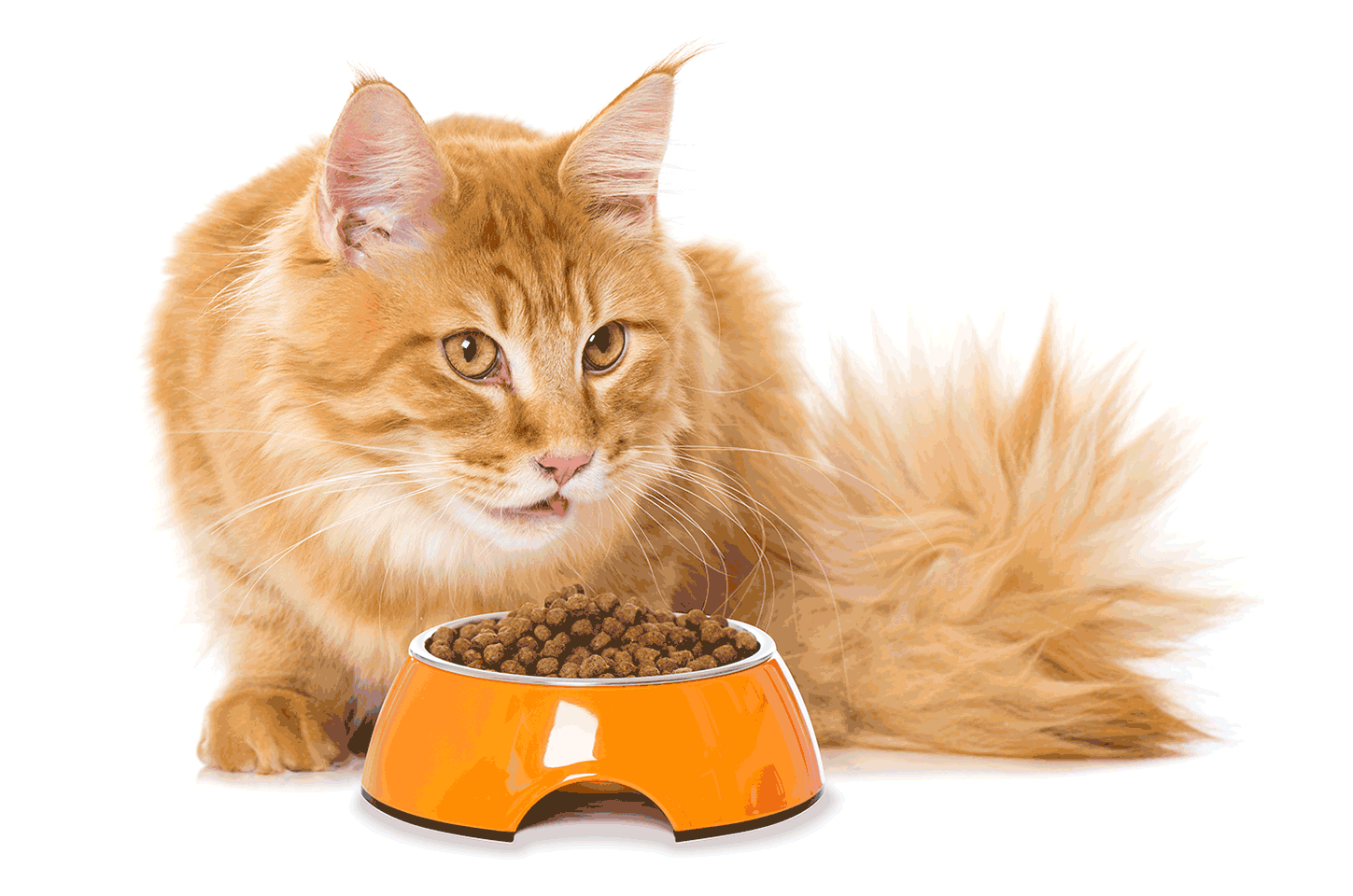
A cat's energy intake should be increased gradually by up to 50% over her maintenance intake throughout its pregnancy. You can feed your pregnant cat wholesome kitten food to provide the needed nutritional support during the last few weeks of gestation.

After birth, the mother cat's energy increases by 50% to 75% over normal in the first week to twice the normal in the second week, and up to three times during the third week. The third and fourth weeks are the most demanding because kittens are still feeding on the lactating cat’s milk and have not begun eating dry or canned food. Once kittens begin weaning, the mother cat should be feed normal food portions to avoid unnecessary weight gain.
Avoiding Obesity
 

Avoiding Obesity


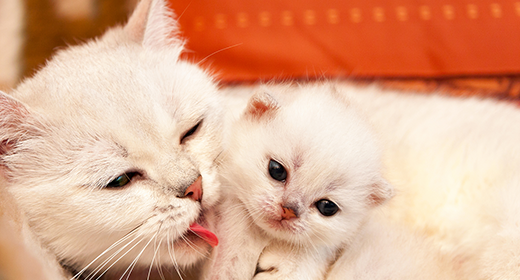
‘What do cats eat that result in them developing obesity’ is a commonly asked question by cat parents. Several factors are responsible for causing an unhealthy weight gain in your cat. Food and nutritional requirements of a cat are quite different than that of a kitten or even a senior cat. Simply increasing the amount of food your cat eats to satisfy its nutritional need could lead to cat obesity. And this is a health problem that should not be taken lightly. In general, indoor cats are at a higher risk of developing obesity because they do not engage in many physical activities. But as a cat parent, you must pay attention to your cat’s food intake and make sure it remains active. You may also introduce a new kind of diet that may help your cat to maintain its weight. Read further ahead for some useful cat feeding tips that can help you.
what shape

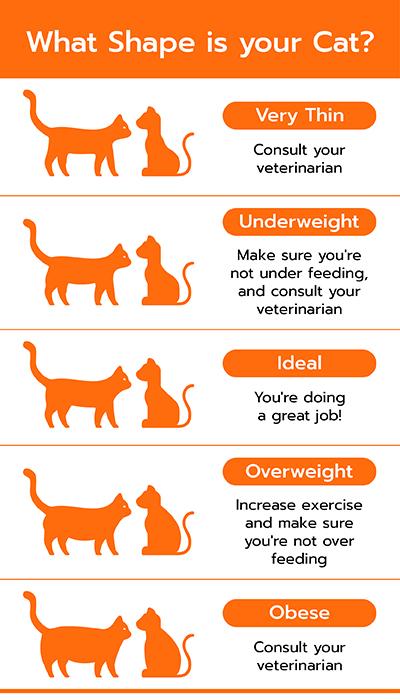
same time, we recommend you control the amount of food you feed your cat. Even if it is a weight loss-based cat food, the quantity should be checked properly.

Preventing Hairballs

Cats spend a considerable amount of time grooming themselves. In the process, they end up swallowing their body hair. This leads to a hair build-up in the stomach. If the hairball doesn’t pass into the intestines, a cat may try to cough it up. A special diet can help decrease the likelihood of hairballs, but you may decrease its effectiveness if you combine it with other foods.

Comparison of eating habits for underweight v/s overweight cat

Underweight cats:

Underweight cats need more nourishment, which will help them increase their body mass, eventually increasing their weight. For underweight cats, an intake of extra calories is also essential. These extra calories will help your cat gain healthy weight. You may contact your vet who can devise a proper weight gain chart for your cat.

Overweight cats:

Overweight cats need a calorie-restricted diet for them to come down to their healthy weight. In fact, the food you feed your overweight or obese cat should ideally have high protein and low calories. At the

How much food should your cat eat daily?

The amount to feed your cat depends on its age, size, and activity level. Feeding guidelines that recommend the daily amount of food you may feed your cat are included on all IAMS packages. Start feeding your cat the mentioned amount and adjust according to its needs. Remember to divide the portion accordingly if you feed more than once a day. With that said now, take a look at this table to know how much to feed your cat:


Weight of cat (kg)

G/day 

3

45

4

55

5

60

6

70

7

80

8

90


How IAMS products help to solve over-eating/ under-eating issues?

IAMS offers a high protein diet food for cats that are either underweight or overweight. The IAMS Indoor Weight and Hairball Care food is made with a formula that is suitable for cats who are either in need of increasing weight or decreasing it. The benefits of this cat diet plan are as follows:

  • #1st Ingredient is Chicken.
  • This formula includes L-Carnitine that helps get your cat achieve its ideal weight and has balanced nutrition.
  • This food is recommended by Veterinarians as well.
  • This cat diet plan also helps maintain your cat’s urinary tract health.

Cat Eating Habits FAQs

  1. Should cats eat alone?
  2. There is no problem if your cat prefers to eat alone, as long as it finishes what you have put on its plate.

  3. Why is my cat hungry all the time?
  4. One of the reasons your cat is hungry all the time could be that it is not being fed the right food. Diseases like diabetes and hyperthyroidism can also make your cat feel hungry all the time. If you notice unusual symptoms in your cat, it is advisable to get it checked by a vet.

  5. What do you feed a cat that refuses to eat?
  6. If your cat refuses to eat, it might not just be because it is a finicky eater. It may also be experiencing health issues like kidney failure or infection in its intestines. Another reason for your cat rejecting food maybe furballs. Furballs are foreign obstacles that get stuck in the cat’s digestive tract, making it hard for your cat to eat food. So, if you notice your cat not eating food, it is advisable to consult the vet immediately.

    If you have ruled out health issues with the vet, then here are some tips on how to feed a cat:

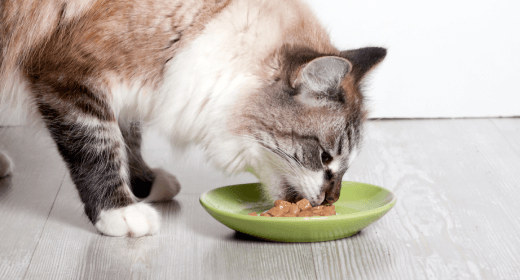
    • In controlled quantities, you may introduce canned tuna or liver in your cat’s food. This will lure your cat to eat what has been served on its plate.
    • Try keeping its feeding bowl at different places to see what place your cat finds comfortable to eat at.
    • Let your cat get hungry. Keep some hours distance between 2 meals as this break will make your cat hungry.
    • Do not keep the food in your cat’s plate all the time. Only serve fresh food when it is time for your cat to eat.

  7. How do I know if my cat is hungry or begging?
  8. Here’s how you can know if your cat is hungry:

    • If your cat is actually hungry it may meow and call you to feed it. It may also meow while eating.
    • You cat will gobble down food very quickly when it is hungry.
    • It may also steal food to satiate its hunger at odd times.

    If you feel that your cat is acting hungry even after feeding it the right amount daily food, it might be a greedy eater.

    Here are some tips to recognize a hungry cat:

    • You should monitor the amount of times you are feeding your cat per day.
    • It is advisable to keep an eye on how much human food your cat steals from your dining table to feed itself. If this happens several times a day, it is an indication that your cat is simply satisfying its temptations.
    • We recommend you keep a tab on how many treats you are feeding your cat throughout the day.
  • cat article detail banner
    cat article detail banner mobile

    adp_description_block419
    How To Read Cat Food Label

    • Share

    Most of us check ingredients and nutritional information on packaging when buying food for our pets. However, reading the nutritional data on a cat food label can get confusing. So, how do you know whether your pet is getting the right food for a healthy body? In this blog, we look at what you can expect to find on a cat food nutrition label and help you improve your understanding of this information. 


    What Information Do Cat Food Labels Contain?

    Cat food labels provide limited information regarding the nutritional value of the package contents. It is important for customers to know what can and cannot be determined from the label, and what information is particularly important. Major components of a pet food label include:

    • Guaranteed Analysis

    • Company/Customer Service Information/Satisfaction

    • Ingredient Panel

    • Manufacturing Code, Expiration, or 'Best Used By' Information

    • Feeding Instructions

    • AAFCO Statement of Nutritional Adequacy
       

    Guaranteed Analysis

    Values in the guaranteed analysis are expressed as either minimum or maximum. A maximum guarantee (% max) means at most this specific amount of the nutrient is included in the formula. A minimum guarantee (% min) means at least this specific amount of the nutrient is included in the formula. The following four nutrients must be included on all pet food labels:

    • Crude Protein (% min)
    • Crude Fiber (% max)
    • Ingredient Panel
    • Crude Fat (% max)
    • Moisture (% max)


    For example, a cat food with a 25% minimum crude protein guarantee should contain at least 25% protein but could contain much more. The only way to determine the actual amount is by laboratory analysis.
    Other information may be guaranteed on cat food products, such as magnesium (% max), taurine (% min), ash (% max), and linoleic acid (% min).

    • The guaranteed analysis is an important tool when beginning to compare cat food formulas, but it doesn't provide meaningful nutritional information. Using information on the energy content and nutrient density of a food is the only way to properly compare cat foods. This information is available from the manufacturer.


    Levels Of Cat Food Regulation

    1. AAFCO

    Animal-feed laws, particularly those pertaining to pet food, are dealt with by AAFCO. AAFCO is a coalition of governmental organisations in North America that aids in regulating animal food. Cat food with AAFCO label has an assurance that certain standards have been followed while manufacturing the food. Therefore, the food is said to meet the nutritional levels required by your pet. MARS pet food too complies with the standards of AAFCO and is nutritionally sound for your pet.
     

    Ingredient Panel

    Ingredients must be listed in order of abundance (largest quantity listed first).

    Because ingredient definitions and designations are standardized, it is difficult to determine the quality of ingredients. Ingredient quality can only be determined from laboratory analysis and animal feeding tests. 

    Here is the information that is required on a cat food label
     

    • Overview: The brand name is usually included along with the list of names of the main ingredient(s), such as rice and chicken.
    • Distributor Name and Address: This gives you information about the manufacturer of the food, so that you can get in touch with them if you have any issues about the product.

    • Net Weight: This tells you how much food is contained in the package.

    • Ingredient List: The ingredients are listed in decreasing order, depending on the weight of the contents.

    • Product Traceability: Using the information on cat food label, you can identify when the food was prepared and even the precise factory that made the package. 

    • Statement of Nutritional Adequacy: A ‘complete and balanced’ cat food should either meet or exceed the defined standards of nutrient profile. It explains which exact cat age and lifestyle the food is meant for. 

    • Assurance of Analysis: This indicates the product’s nutritional content. It must contain the highest amounts of crude fiber and moisture and the minimum amounts of crude protein and crude fat. Although optional, percentages for other nutrients are frequently included. However, the key elements mentioned in the assured analysis of the cat food nutrition label must meet AAFCO’s nutrient profile guidelines.

    • Calorie Declaration: Calories are stated on a kilocalorie per kilogram basis and other commonly used units of measurement such as kilocalories per cup. You can compare several cat food products using this information.

    • Direction for Feeding: You can use these recommendations to figure out how much food to give your cat each day. Additionally, you might need to change the amount of food your pet consumes to assist them in maintaining an ideal body condition.


    AAFCO Statement Of Nutritional Adequacy

    AAFCO nutritional adequacy statements are required on all pet foods. Products may either be formulated or tested according to AAFCO procedures and recommendations.

    • A 'formulated' statement means the product has been manufactured according to AAFCO nutritional guidelines, but not actually fed to cats prior to sale.
    • A 'tested' statement indicates the product has been formulated, then fed to cats prior to sale to ensure it meets important criteria related to growth, maintenance, and/or reproduction. 

      Veterinary-exclusive products include statements such as, 'This product is intended for intermittent feeding only' and 'Use only as directed by your veterinarian.'


    Manufacturing And 'Best Used By' Codes

    Manufacturing codes allow the company to track products for quality and inventory issues. In order to quickly and efficiently handle a customer inquiry, the company's customer service department will usually ask the customer for this code.

    Expiration or 'Best Used By' dates are optional but are helpful in determining product freshness and shelf life.


    How To Read A Cat Food Nutrition Label

    Here are a few tips to help you read a cat food nutrition label. 

    • Check the name of the product: This tells you the type of cat food. Typically, a key component or flavour is highlighted in the product name.
    • Know the intent or purpose: The food must state that it is for cats on the container. Cats have highly specific nutritional requirements that necessitate a certain type of diet.

    • Choose the right product for your cat: The information on the back of the cat food container is extremely important. You can determine whether the food will offer a complete and balanced diet for your cat’s life stage by reading the nutritional adequacy statement. The term 'life stage' describes a cat's particular stage of growth. The information can also state that the food is suitable for cats at all life stages, for breeding cats (growth and reproduction), and, possibly, for indoor or outdoor cats.


    Company Information And Satisfaction Guarantee

    The manufacturer's information should include the company name, address, and phone number so customers can quickly and easily obtain product information.

    A toll-free telephone number should be provided as a convenience to the customer and to ensure that a charge is not incurred when calling for information.

    The satisfaction guarantee should be an 'active' statement. This means that in addition to stating that the product is guaranteed, the company should indicate what action will be taken to meet customer expectations (replace product, money returned, etc.).

Close modal