Enter a keyword below to search for articles and products.
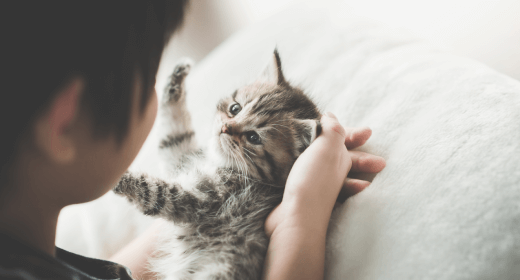
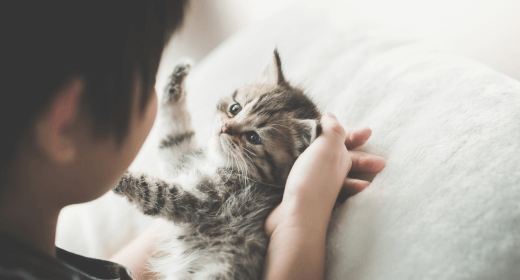
While keeping kittens indoors has significant benefits, protecting them from a large number of dangers, it does require you to pay attention to the provision of enrichment opportunities. While kittens spend a great deal of their time sleeping, their periods of wakefulness can and should be used to stimulate psychological and physical activity. The natural predatory/play behavior of kittens is usually easy to stimulate with interactive toys, such as feathers on a string or flicking a laser dot along the floor and walls. One way to defeat the “nighttime crazies” is to have a pet owner engage in active, vigorous play before feeding your kitten at bedtime. This mimics the natural hunting-feeding-grooming-sleeping sequence of cats.
Kittens also can be trained. They will respond quite favorably to clicker training using a high-quality food treat as reinforcement. As with dogs, training sequences can be used to ensure that kittens are getting adequate physical and mental exercise. Many cats also benefit from social activity with other cats, especially if they were introduced to other cats early in life. Cats put a premium on managing space, so it is important that multiple-cat homes offer a variety of places to hide, sleep, and observe, using both the horizontal and vertical dimensions.
A greater challenge is providing enrichment opportunities for dogs and cats when a person or another pet is not present to interact with them. Kittens and cats will spend a great deal of time watching out windows, especially if there is a bird feeder or butterfly garden within view, so make sure to keep at least one window blind open—especially if it looks out to an area with frequent movement and activity.
Providing your kitten with enrichment opportunities helps to prevent stress and the development of abnormal behaviors. These abnormal behaviors, in turn, put a strain on the pet owner and can play a key role in eventual relinquishment. Enrichment also provides a context for physical and psychological exercise that supports the overall well-being of your kitten.
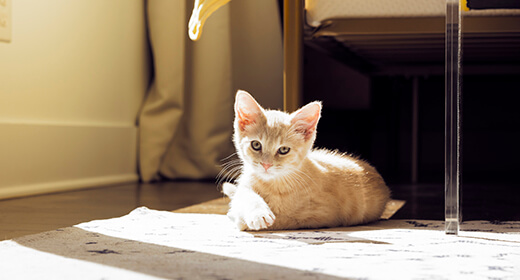
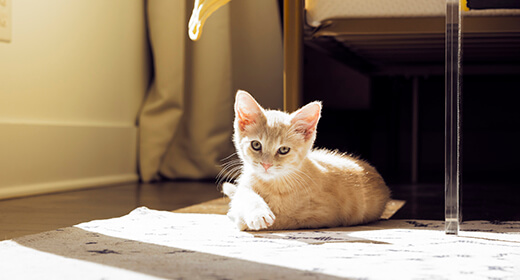
When you snuggle up to your new feline friend and notice them scratching a tad too often, it might be a sign of kitten fleas. Along with causing itching and discomfort, this dreaded parasite can also transmit diseases. In fact, during extreme cases, fleas can even cause anaemia, especially in little ones like kittens. However, don't worry, we have the purrfect guide for you to handle these pesky invaders.
Before jumping to any kitten flea remedy, you must evaluate the situation. Depending on your kitten's age and weight, your approach will vary.
Points to remember:
Kittens under 12 weeks should not be introduced to chemical flea prevention products.
Always check product guidelines to ensure they are suitable for your kitten’s age and weight.
Only use products designed for cats, as our feline friends process chemicals differently than dogs.
Comb your kitten: A fine comb can effectively remove visible fleas.
Bathe your kitten: If your kitten is of suitable age, use a flea and tick shampoo made for sensitive skin. For younger kittens, you might want to try non-medicated, tear-free soaps like a baby shampoo.
Clean the environment: Your battle against fleas isn't just on your kitten. Wash all bedding in hot soapy water and vacuum carpeted areas thoroughly. Empty vacuum bags or canisters outside. Sprays can help eradicate fleas and their eggs indoors.
Protect the Yard: Even if your kitten is an indoor kitty, fleas might sneak in from outside. Using sprays can be an effective way to safeguard your yard.
When it comes to flea treatment for kittens under 12 weeks, options can be limited. Young kittens are particularly sensitive, and many treatments suited for adult cats can be harmful to them. Here's how to proceed:
For kittens under 8 weeks old, your safest bet is to use a flea comb. This tool, when dipped in hot, soapy water between brushes, can help you physically remove and kill off adult fleas.
Another effective method for very young kittens is bathing. A gentle bath with warm water and a fragrance-free dish liquid or natural baby shampoo can be effective in reducing the flea population. However, be sure to make this a quick affair to prevent your kitten from getting overly cold or scared.
Natural sounds great, doesn't it? But here's a cat-sized caution: Avoid essential oils as a kitten flea remedy. Many essential oils are toxic to cats, even in minimal doses. Some flea treatments boasting 'natural' ingredients might contain these oils, which could pose risks for your kitten. Always read labels and, when in doubt, consult with your vet.
For kittens older than 8-10 weeks and weighing more than 1.5-2 pounds, topical treatments become an option. A golden rule here is always to ensure the chosen product matches your kitten's age and weight.
It's essential to strike a balance between effectiveness and safety. Prescription treatments from your veterinarian typically offer the most robust protection against fleas. However, there are over-the-counter options available, which might be more accessible for some pet owners. No matter your choice, the key is to read labels carefully and avoid harmful ingredients, such as permethrin and certain essential oils.
Fleas might be pesky, but with knowledge, patience, and the right tools, you can keep your kitten flea-free and happy. Always keep your veterinarian in the loop and ensure any treatment or remedy you use is age and weight appropriate. Remember, a flea-free kitten is a happy kitten!