Enter a keyword below to search for articles and products.
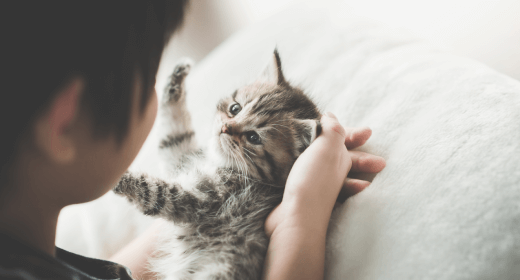
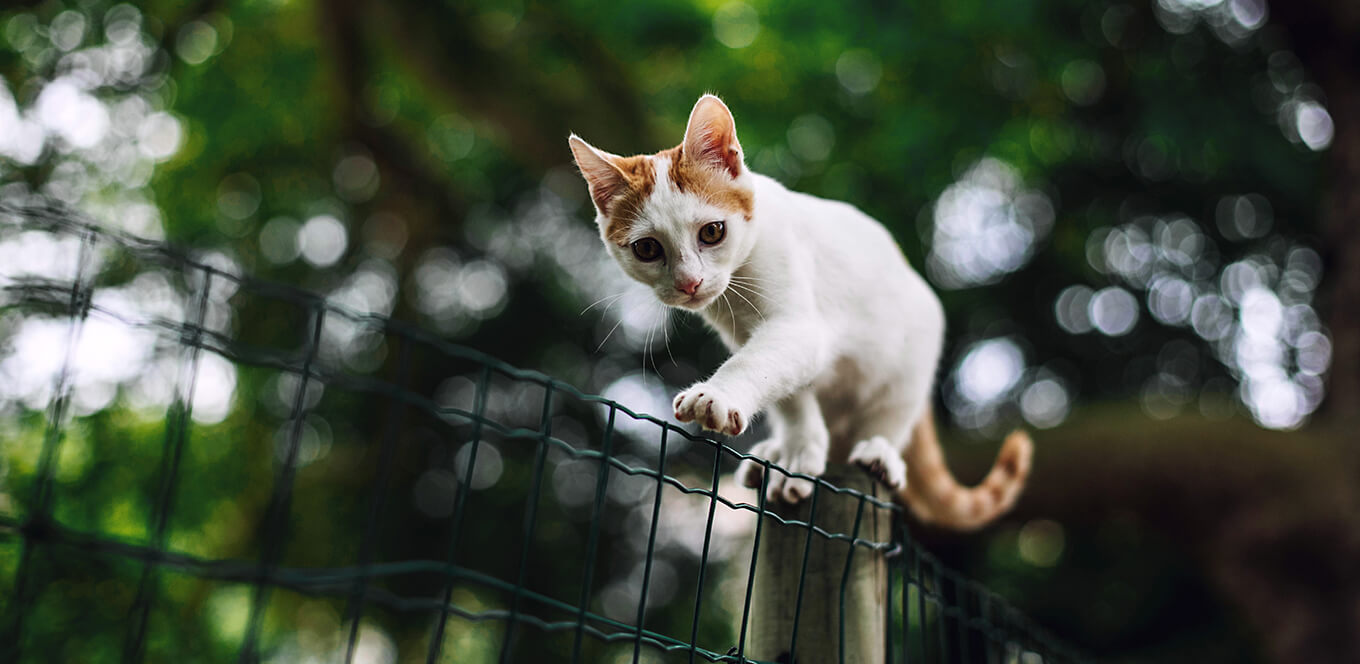
While keeping kittens indoors has significant benefits, protecting them from a large number of dangers, it does require you to pay attention to the provision of enrichment opportunities. While kittens spend a great deal of their time sleeping, their periods of wakefulness can and should be used to stimulate psychological and physical activity. The natural predatory/play behavior of kittens is usually easy to stimulate with interactive toys, such as feathers on a string or flicking a laser dot along the floor and walls. One way to defeat the “nighttime crazies” is to have a pet owner engage in active, vigorous play before feeding your kitten at bedtime. This mimics the natural hunting-feeding-grooming-sleeping sequence of cats.
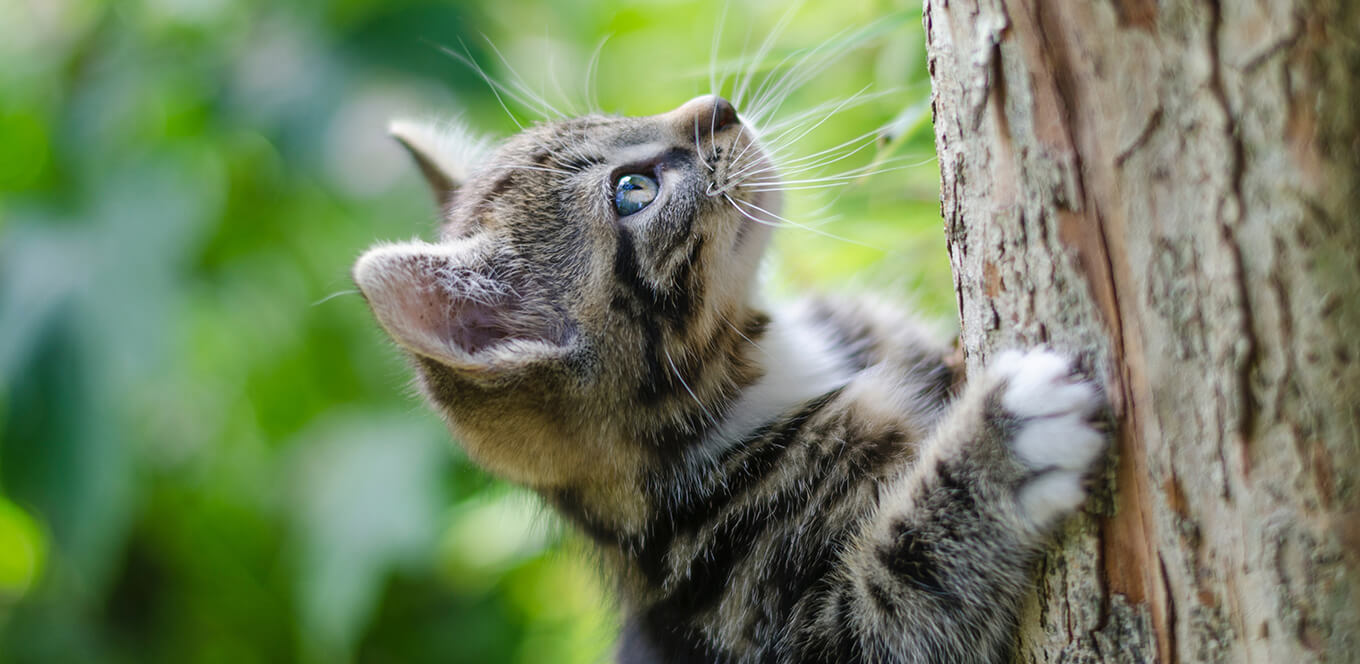
Kittens also can be trained. They will respond quite favorably to clicker training using a high-quality food treat as reinforcement. As with dogs, training sequences can be used to ensure that kittens are getting adequate physical and mental exercise. Many cats also benefit from social activity with other cats, especially if they were introduced to other cats early in life. Cats put a premium on managing space, so it is important that multiple-cat homes offer a variety of places to hide, sleep, and observe, using both the horizontal and vertical dimensions.
A greater challenge is providing enrichment opportunities for dogs and cats when a person or another pet is not present to interact with them. Kittens and cats will spend a great deal of time watching out windows, especially if there is a bird feeder or butterfly garden within view, so make sure to keep at least one window blind open—especially if it looks out to an area with frequent movement and activity.
Providing your kitten with enrichment opportunities helps to prevent stress and the development of abnormal behaviors. These abnormal behaviors, in turn, put a strain on the pet owner and can play a key role in eventual relinquishment. Enrichment also provides a context for physical and psychological exercise that supports the overall well-being of your kitten.
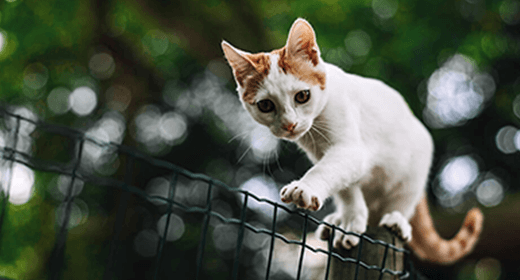
Are you considering feeding a raw diet to your kitten? Before you do, make sure you have the right information. Get the facts about 10 common myths associated with raw meat diets.
FACT: No scientific studies have shown benefits of feeding raw diets to kittens or cats. Their appeal is based on word of mouth, testimonials and perceived benefits.
FACT: Lynxes and other animals in the wild, like wolves, do eat raw meat (in addition to berries, plants, etc.). However, the average lifespan for an animal in the wild is only a few years. Therefore, what is nutritionally “optimal” for a wild animal like a lynx is not optimal for our pets that we hope will live longer and healthier lives.
FACT: Cats, especially kittens, senior cats or immunosuppressed animals, can become infected with Salmonella, Clostridium, Campylobacter and other bacteria found in raw meat diets, just as people can.
FACT: Even meats purchased at the best stores for people can contain harmful bacteria, so purchasing “human-grade” meat does not protect against the health risks of uncooked meats. (Ask yourself: Would you eat raw ground beef?) It is also important to keep in mind that the term “human grade” has no legal definition for pet food.
FACT: Most of the bacteria found in raw meat diets can easily survive freezing and freeze-drying.
FACT: Bones, whether raw or cooked, can fracture your kitten’s teeth. They also can block or tear the esophagus, stomach or intestine.
FACT: All the enzymes dogs and cats (and people) need for digestion are already in the gastrointestinal tract. Additional enzymes from food are not required for digestion.
FACT: Corn, oats, rice, barley and other grains are healthy ingredients that contain protein, vitamins and minerals; they are not added as fillers and are unlikely to cause allergies. Although meat is an important component of diets for kittens and cats, grains can be part of a high-quality, nutritionally balanced diet.
FACT: Byproducts are the animal parts American people don’t typically eat, such as livers, kidneys or lungs — in other words, the organs and meats other than animal muscle. Note that some pet foods may actually list these ingredients (e.g., duck liver, beef lung), but these are really just byproducts. Most commercial and many home-prepared raw diets also contain by products.
FACT: Most homemade (and even some commercial) raw meat diets are extremely deficient in calcium and a variety of other nutrients, even if chicken necks, bones or eggshells are added. This can be disastrous for any animal but especially for young, growing kittens, and can result in fractured bones. For complete and balanced nutrition, feed your cat a high-quality kitten food like IAMS™ ProActive Health™ Healthy Kitten.