Enter a keyword below to search for articles and products.
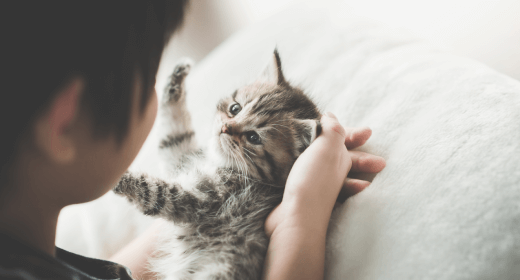
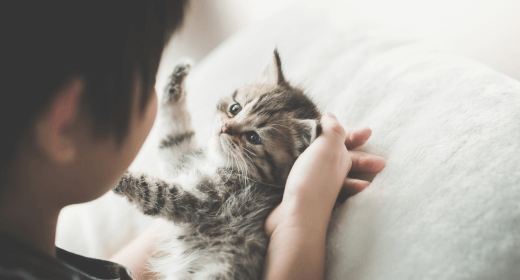
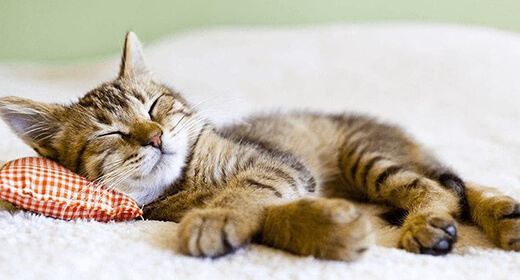
While keeping kittens indoors has significant benefits, protecting them from a large number of dangers, it does require you to pay attention to the provision of enrichment opportunities. While kittens spend a great deal of their time sleeping, their periods of wakefulness can and should be used to stimulate psychological and physical activity. The natural predatory/play behavior of kittens is usually easy to stimulate with interactive toys, such as feathers on a string or flicking a laser dot along the floor and walls. One way to defeat the “nighttime crazies” is to have a pet owner engage in active, vigorous play before feeding your kitten at bedtime. This mimics the natural hunting-feeding-grooming-sleeping sequence of cats.
Kittens also can be trained. They will respond quite favorably to clicker training using a high-quality food treat as reinforcement. As with dogs, training sequences can be used to ensure that kittens are getting adequate physical and mental exercise. Many cats also benefit from social activity with other cats, especially if they were introduced to other cats early in life. Cats put a premium on managing space, so it is important that multiple-cat homes offer a variety of places to hide, sleep, and observe, using both the horizontal and vertical dimensions.
A greater challenge is providing enrichment opportunities for dogs and cats when a person or another pet is not present to interact with them. Kittens and cats will spend a great deal of time watching out windows, especially if there is a bird feeder or butterfly garden within view, so make sure to keep at least one window blind open—especially if it looks out to an area with frequent movement and activity.
Providing your kitten with enrichment opportunities helps to prevent stress and the development of abnormal behaviors. These abnormal behaviors, in turn, put a strain on the pet owner and can play a key role in eventual relinquishment. Enrichment also provides a context for physical and psychological exercise that supports the overall well-being of your kitten.
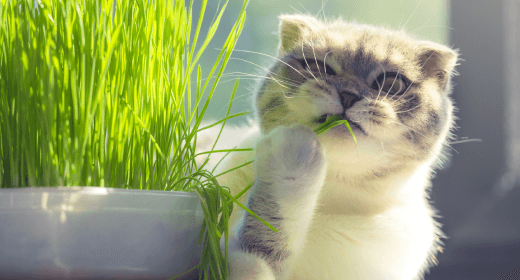
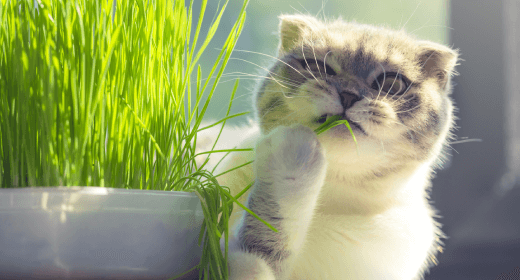
Fiber is a type of carbohydrate that isn't digested by a cat's gastrointestinal tract. It is important for cat health, because it provides bulk to move food through. Some types of fiber can be fermented (broken down by bacteria) in the system. This process creates short-chain fatty acids (SCFA), which are an important energy source for the cells lining the intestinal tract.
Today, people are more aware of fiber and its role in their diet. Studies showing the beneficial effects of higher fiber levels in humans influence the way many people think about their own food and that of their pets. Some manufacturers now apply the recommendations of human nutritionists and make high-fiber diets for cats, but cats have a much shorter digestive tract than we do. And unlike humans, cats are carnivorous, so their nutritional needs are better satisfied with meat rather than plant matter. Therefore, cats have different dietary needs than humans. For more than 60 years, companion animal nutritionists at IAMS™ have been studying diets to meet the special nutritional needs of cats.
IAMS Company research shows the optimal crude fiber level for healthy cats ranges from 1.4% to 3.5%. At these levels, nutrient breakdown is maximized. In unique situations, such as hairballs, higher fiber levels may be beneficial.
An important characteristic of fiber is its fermentability, or how well it can be broken down by bacteria in the intestine. This breakdown produces short-chain fatty acids, which provide energy to the intestines. Fiber varies in fermentability. Fiber sources used in pet foods include cellulose, which is poorly fermentable; beet pulp, which is moderately fermentable; and gums and pectin, which can be highly fermentable. Research has shown that moderate levels of moderately fermentable fiber, such as beet pulp, provide the benefits of energy for the intestinal lining and bulk, without the negative effects of excessive stool or gas and, therefore, are beneficial in cat diets.
High levels of poorly fermentable fiber are used in some weight-reduction pet foods to dilute the calories in a serving. IAMS Company research shows that high fiber levels can make it harder to digest other nutrients in the food and, in turn, reduce the nutritional quality of a cat's diet. Your cat making more trips to the litter box can be a result.
When choosing a pet food, fiber is an important consideration, but remember that the needs of cats are not the same as those of humans. A moderate level of moderately fermentable fiber, such as beet pulp, provides proven nutritional benefits for cats. Cat diets containing high levels of poorly fermentable fiber dilute calories and deprive cats of the nutrients they need.
All IAMS products are made with levels of moderately fermentable fiber needed to promote intestinal health. And all IAMS foods, such as IAMS ProActive Health™ Adult Original with Chicken, contain the moderately fermentable fiber system, which is the exclusive property of IAMS Company and is protected by U.S. Patent No. 5,616,569 for Pet Food Products Containing Fermentable Fibers and Process for Treating Gastrointestinal Disorders.