Enter a keyword below to search for articles and products.
So you have a new kitten — congratulations! You’re about to embark on a pet ownership journey that could span several decades. But if you’ve never owned a cat or kitten before, you may have questions about how to keep your kitten healthy and thriving. Use our guide to get started, and welcome to pet parenthood.
When you choose a veterinarian, you’re choosing a partner in your kitten’s health care. Scheduled vaccinations and yearly examinations mean that you’ll see your veterinarian on a regular basis, so choose wisely. When researching veterinary clinics for your cat, make sure to do the following:
Owners should have their cats spayed or neutered unless they plan to show or breed them. Veterinarians advise spaying or neutering by at least 6 months of age. Consider the following:
Each year, millions of cats are euthanized because the new cat population far exceeds the number of homes that can be found for them. Here’s why you should consider spaying or neutering your kitten:
While we hope your kitten experiences few, if any, health issues over the course of her life, it’s smart to familiarize yourself with common cat ailments. Use our guide to some of the most common medical issues that can affect kitten health. The more you know, the better you’ll be able to notice when your kitten isn’t feeling well.
Most common in warm spring and summer months, these pinhead-size insects can be active all year long. Fleas can jump onto your cat, lay their eggs, breed, and spread to your furniture and to you, looking for blood. In addition to causing discomfort and scratching in many cats, fleas can transmit parasitic or infectious diseases, including tapeworms. A severe flea infestation may, in turn, cause anemia (low red blood cell count) and/or allergic dermatitis, a skin allergy characterized by itching and irritation. Though some cats become irritable and scratch, others have no visible signs of discomfort.
Luckily, flea prevention treatments are numerous and easy to give:
Hairballs are tube-shaped, brown masses of hair fibers. When cats clean themselves, they swallow fur. Because hair isn’t digestible, it either passes through and ends up in the litter box or it is vomited.
Cats that pass hairballs more than once a week or that pass foul-smelling hairballs may have a serious underlying health problem. See your veterinarian if your cat experiences frequent hairballs.
Here’s how to help prevent hairballs in your kitten or cat:
Feline lower urinary tract disease is a potentially fatal, painful inflammation of the lower urinary tract that can be caused by viruses, bacteria, diet, decreased water consumption or urine retention.
Symptoms include blood in the urine, difficult and frequent urination (often in small quantities), inappropriate urination, lack of energy and loss of appetite.
You can help your cat maintain proper urinary acidity and magnesium levels through a properly balanced diet that helps promote urinary tract health.
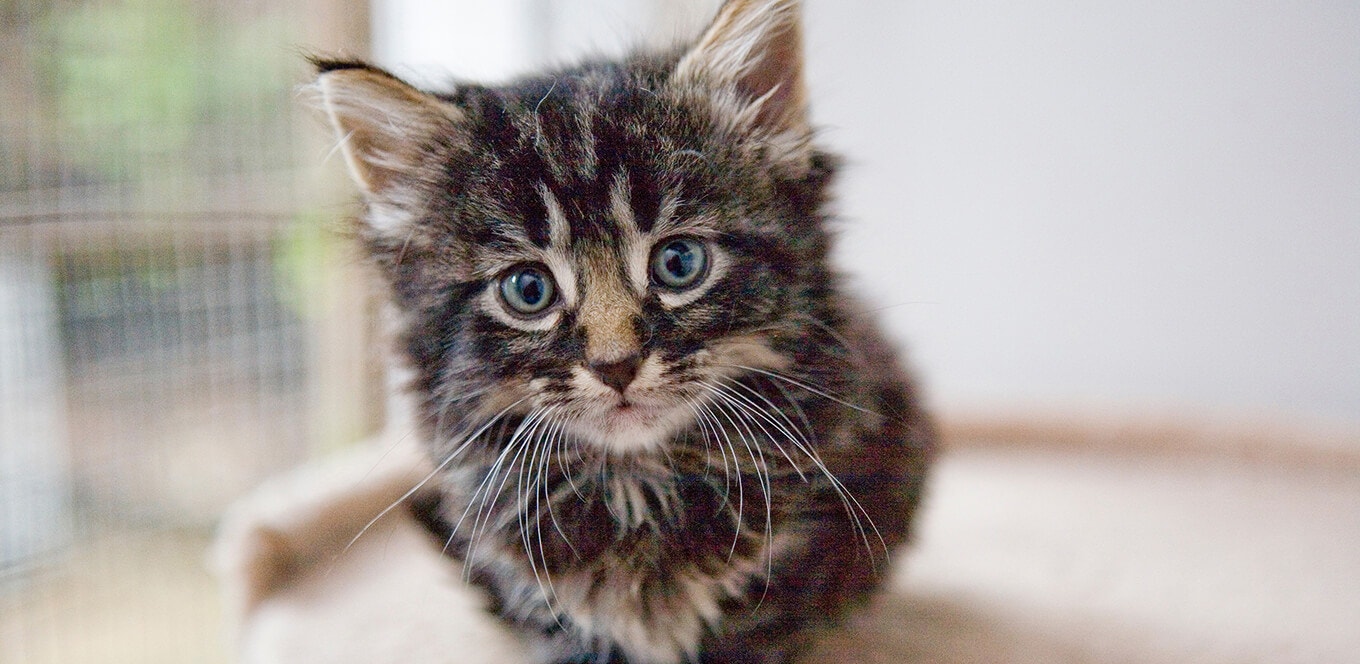


Are you considering feeding a raw diet to your kitten? Before you do, make sure you have the right information. Get the facts about 10 common myths associated with raw meat diets.
FACT: No scientific studies have shown benefits of feeding raw diets to kittens or cats. Their appeal is based on word of mouth, testimonials and perceived benefits.
FACT: Lynxes and other animals in the wild, like wolves, do eat raw meat (in addition to berries, plants, etc.). However, the average lifespan for an animal in the wild is only a few years. Therefore, what is nutritionally “optimal” for a wild animal like a lynx is not optimal for our pets that we hope will live longer and healthier lives.
FACT: Cats, especially kittens, senior cats or immunosuppressed animals, can become infected with Salmonella, Clostridium, Campylobacter and other bacteria found in raw meat diets, just as people can.
FACT: Even meats purchased at the best stores for people can contain harmful bacteria, so purchasing “human-grade” meat does not protect against the health risks of uncooked meats. (Ask yourself: Would you eat raw ground beef?) It is also important to keep in mind that the term “human grade” has no legal definition for pet food.
FACT: Most of the bacteria found in raw meat diets can easily survive freezing and freeze-drying.
FACT: Bones, whether raw or cooked, can fracture your kitten’s teeth. They also can block or tear the esophagus, stomach or intestine.
FACT: All the enzymes dogs and cats (and people) need for digestion are already in the gastrointestinal tract. Additional enzymes from food are not required for digestion.
FACT: Corn, oats, rice, barley and other grains are healthy ingredients that contain protein, vitamins and minerals; they are not added as fillers and are unlikely to cause allergies. Although meat is an important component of diets for kittens and cats, grains can be part of a high-quality, nutritionally balanced diet.
FACT: Byproducts are the animal parts American people don’t typically eat, such as livers, kidneys or lungs — in other words, the organs and meats other than animal muscle. Note that some pet foods may actually list these ingredients (e.g., duck liver, beef lung), but these are really just byproducts. Most commercial and many home-prepared raw diets also contain by products.
FACT: Most homemade (and even some commercial) raw meat diets are extremely deficient in calcium and a variety of other nutrients, even if chicken necks, bones or eggshells are added. This can be disastrous for any animal but especially for young, growing kittens, and can result in fractured bones. For complete and balanced nutrition, feed your cat a high-quality kitten food like IAMS™ ProActive Health™ Healthy Kitten.