Enter a keyword below to search for articles and products.
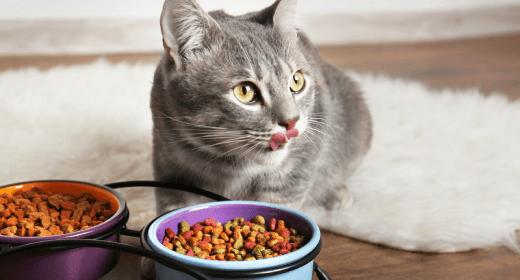
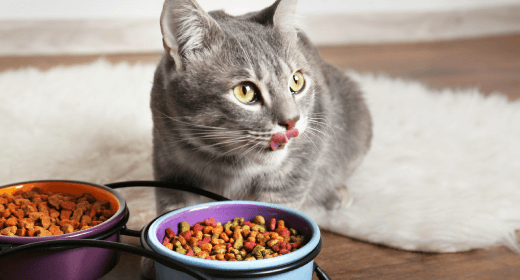
Good nutrition is as important to your cat as it is to you, but her nutritional needs are quite different! Unlike humans, a cat needs a high-fat diet with less fibre. Even if you prefer a vegetarian diet, you should understand that cats are carnivores. They need nutrients from animal protein and fat for optimal health, and they benefit from fibre for a healthy digestive tract and carbohydrates for energy.
With thousands of pet foods available, how do you pick the one that's right for your cat?
Start by identifying the cat's life stage and lifestyle. Kittens, nursing mothers, and mature/senior pets are examples of life stages, and each has different nutritional requirements. All cat foods should state which life stage they are recommended for.
Nutritional needs also vary depending on lifestyle. A cat whose primary activity is guarding the couch doesn't need as much energy as one who likes to spend time roaming outside.
Finally, it is important to take into account any special medical condition your cat may have, including food allergies that might require a special diet recommended by your veterinarian.
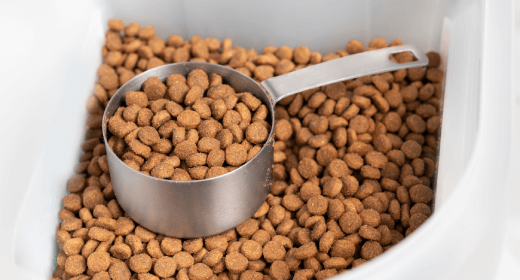
Once you've determined your cat's life stage and lifestyle needs, decide whether to feed dry or wet food. Most cats thrive on only dry food. This type of food promotes oral hygiene and health through abrasive action. Some cats, especially finicky eaters, enjoy the smooth and wet texture of canned or pouch foods.
Remember that, while dry food can be left in a bowl all day, wet food should be thrown away after 30 minutes if not eaten. Dry food is the best choice for busy people who are not normally home during the day.
Once you know your pet's nutritional needs and your pet's preference, you are ready to go shopping.
Because cats need the nutrients found in animal sources, it’s best to pick a food in which a primary ingredient (one of the first ones listed) is an animal-based protein source such as chicken, lamb, fish, egg, or one of their by-products. These ingredients contain all the essential amino acids, including taurine, which isn’t found in a vegetable-based protein source.
Using a combination of carbohydrates in a diet, such as corn meal or barley and grain sorghum, ensures efficient absorption and helps maintain energy levels. And beet pulp is an excellent fibre source that promotes a healthy digestive tract.
For a soft, thick coat and healthy skin, your pet needs fatty acids like those found in vitamin-rich fish oils and quality fat sources such as chicken.
Cat food labels provide limited information on the nutritional value of your pet's food because labeling regulations do not allow manufacturers to describe the quality of ingredients on the package. A reputable pet food manufacturer can explain to you how they evaluate and assure the quality of their products.
When choosing food, the price on the bag, while important, is usually not the best consideration. A low price may indicate cheap ingredients, or ingredients that change as manufacturer costs fluctuate.
In addition, many lower-priced products have higher daily portions to provide the same amount of nutrition found in a high-quality diet. To get a better idea of cost, it is the cost per feeding, not the total cost, that counts.
To figure cost per feeding, divide the total cost by the number of days the product lasts. For example, a 20-lb bag of food that costs $18.99 and lasts 30 days is $0.63 per day. A 20-lb bag that costs $15.99 and lasts 20 days costs $0.80 per day. When compared closely, high-quality pet foods are quite favourable to other brands.
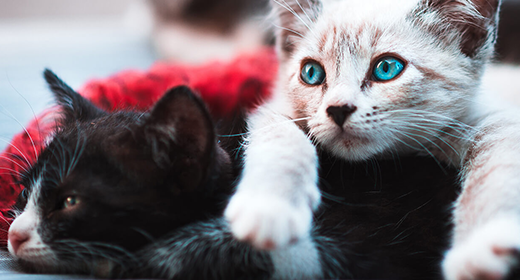
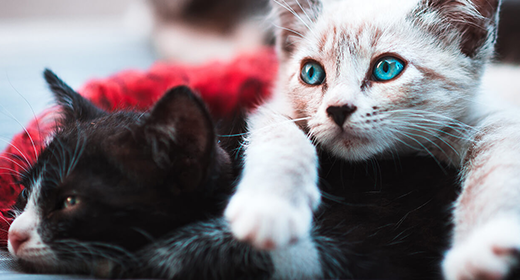
Taurine is an important component found in all IAMS™ kitten foods. This essential amino acid is critical for normal heart muscle function, vision and reproduction in kittens. It is also needed to form the bile salts that aid in digestion. Unlike other amino acids, taurine is found as a free amino acid in body tissues, such as the heart and eyes, and is not incorporated into proteins.
Most mammals manufacture taurine from other amino acids. However, kittens cannot manufacture a sufficient amount and therefore must acquire enough additional taurine through diet to meet their needs. In pet food, taurine is naturally found in animal-based protein ingredients and also can be added separately.
IAMS kitten foods are formulated with high-quality animal-based proteins as their primary ingredient. In addition, they are supplemented with extra taurine.
We supplement taurine in IAMS dry and canned cat foods to ensure we provide optimal levels of this essential nutrient. IAMS wet kitten foods, such as IAMS™ Perfect Portions™ Healthy Kitten Paté with Chicken, are supplemented with taurine because they must contain as much as twice the amount of taurine found in dry food for cats to maintain adequate blood taurine levels. The canning process may affect the complex taurine balance in your cat or kitten. Our wet cat foods are supplemented with taurine to meet these higher needs.
IAMS dry kitten foods, such as IAMS™ ProActive Health™ Healthy Kitten, also include taurine as an ingredient to supplement the primary source of this amino acid, which is animal-based protein from sources such as chicken, egg, lamb and fish. However, these sources can vary in their taurine content, and adding more taurine is a sound approach to ensure optimal taurine levels.
Kittens that eat a diet deficient in taurine can develop several serious health conditions.
Taurine is essential to the proper development and function of cells in the retina of the eye. If insufficient taurine is present, the retinal cells don’t function properly and may die, eventually causing impaired vision and even blindness. This process is referred to as feline central retinal degeneration.
Taurine is also necessary for normal function of the heart muscle cells. Taurine deficiency leads to a weakening of the heart muscle, which, in turn, can lead to heart failure. This condition is known as dilated cardiomyopathy and can be fatal.
To help protect your kitten’s health, both now and when she is fully grown, make sure to feed a diet with sufficient taurine. Learn more about the nutritional needs of kittens.
Reference
Case L, et al. Canine and Feline Nutrition. 3rd ed. Maryland Heights, MO: Mosby Elsevier, 2011.