Enter a keyword below to search for articles and products.
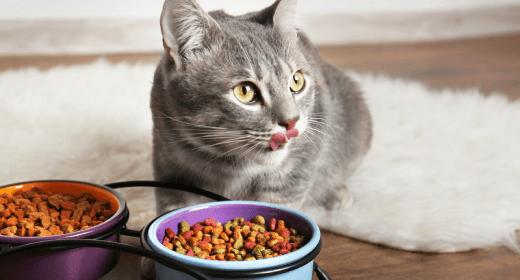
Good nutrition is as important to your cat as it is to you, but her nutritional needs are quite different! Unlike humans, a cat needs a high-fat diet with less fibre. Even if you prefer a vegetarian diet, you should understand that cats are carnivores. They need nutrients from animal protein and fat for optimal health, and they benefit from fibre for a healthy digestive tract and carbohydrates for energy.
With thousands of pet foods available, how do you pick the one that's right for your cat?
Start by identifying the cat's life stage and lifestyle. Kittens, nursing mothers, and mature/senior pets are examples of life stages, and each has different nutritional requirements. All cat foods should state which life stage they are recommended for.
Nutritional needs also vary depending on lifestyle. A cat whose primary activity is guarding the couch doesn't need as much energy as one who likes to spend time roaming outside.
Finally, it is important to take into account any special medical condition your cat may have, including food allergies that might require a special diet recommended by your veterinarian.
Once you've determined your cat's life stage and lifestyle needs, decide whether to feed dry or wet food. Most cats thrive on only dry food. This type of food promotes oral hygiene and health through abrasive action. Some cats, especially finicky eaters, enjoy the smooth and wet texture of canned or pouch foods.
Remember that, while dry food can be left in a bowl all day, wet food should be thrown away after 30 minutes if not eaten. Dry food is the best choice for busy people who are not normally home during the day.
Once you know your pet's nutritional needs and your pet's preference, you are ready to go shopping.
Because cats need the nutrients found in animal sources, it’s best to pick a food in which a primary ingredient (one of the first ones listed) is an animal-based protein source such as chicken, lamb, fish, egg, or one of their by-products. These ingredients contain all the essential amino acids, including taurine, which isn’t found in a vegetable-based protein source.
Using a combination of carbohydrates in a diet, such as corn meal or barley and grain sorghum, ensures efficient absorption and helps maintain energy levels. And beet pulp is an excellent fibre source that promotes a healthy digestive tract.
For a soft, thick coat and healthy skin, your pet needs fatty acids like those found in vitamin-rich fish oils and quality fat sources such as chicken.
Cat food labels provide limited information on the nutritional value of your pet's food because labeling regulations do not allow manufacturers to describe the quality of ingredients on the package. A reputable pet food manufacturer can explain to you how they evaluate and assure the quality of their products.
When choosing food, the price on the bag, while important, is usually not the best consideration. A low price may indicate cheap ingredients, or ingredients that change as manufacturer costs fluctuate.
In addition, many lower-priced products have higher daily portions to provide the same amount of nutrition found in a high-quality diet. To get a better idea of cost, it is the cost per feeding, not the total cost, that counts.
To figure cost per feeding, divide the total cost by the number of days the product lasts. For example, a 20-lb bag of food that costs $18.99 and lasts 30 days is $0.63 per day. A 20-lb bag that costs $15.99 and lasts 20 days costs $0.80 per day. When compared closely, high-quality pet foods are quite favourable to other brands.


Providing your kitten with the proper nutrition goes way beyond just putting fresh food in a clean bowl. Your kitten’s nutritional needs will change as her body develops through adolescence. Proper nutrition during these critical growth periods will help your kitten mature into a strong, healthy adult cat. Discover four essential kitten-feeding tips you need to know in your kitten’s first year.
Learning what development milestones your kitten will experience in her first year will help you decide what and when to feed her.
After kittens are weaned, they enter a stage of rapid growth, which lasts through the sixth month of life. They need a balanced diet to deliver the nutrients and energy to sustain such rapid development.
Kittens have twice the energy needs of adult cats on a pound-per-pound basis. But their smaller mouths, teeth and stomachs limit the amount of food they can digest during a single meal. Therefore, it may be best to divide their total daily food amount into three or four smaller meals.
Because every bite must be packed with nutrition, kittens require a diet specifically formulated for growth. The best choice is a food with animal-based proteins that is highly digestible, nutrient dense and designed to meet kittens’ unique nutritional needs.
As kittens approach adult size, their nutritional requirements begin to change again. Their rate of growth begins to slow, activity levels may decline and they can start eating fewer, larger meals each day. During this stage, kittens begin to look like adults, but they are still growing and need the special nutrition found in kitten food.
The adolescent growth stage is a time when many cat owners are tempted to change a kitten’s food for variety. But cats do not get bored with a consistent diet of high-quality dry food. You can supplement your kitten’s dry food with a nutrient-dense canned food for a nutritious change of pace.
When your cat is about 12 months old, it’s time to switch to a maintenance formula adult cat food, such as IAMS™ ProActive Health™ Healthy Adult with Chicken. At this age, cats no longer need the extra calories and nutrients for growth supplied by kitten food. As with any change in a cat’s diet, remember to gradually transition from kitten food to adult food over a period of several days.
Monitor your cat’s weight and body condition during the transition, and adjust feeding portions if necessary. Because cats generally eat only what they need, free-choice feeding is fine for most cats. However, some indoor cats that don’t exercise much may overeat if fed free choice. In this situation, portion-controlled feeding twice a day is a good alternative.
Giving a kitten “human food” and table scraps can lead to undesirable behaviors, such as begging or stealing food. Feeding homemade diets or food formulated for adult cats (especially those designed for weight loss), or supplementing a complete and balanced diet with vitamins could cause nutritional disorders.
Kittens and cats are strict carnivores and need the nutrients found in meat. For example, sufficient amounts of taurine, an essential amino acid provided naturally through meat, help cats maintain healthy eyes, heart and reproduction. All IAMS kitten and cat food formulas have optimal levels of taurine for every life stage.