Enter a keyword below to search for articles and products.
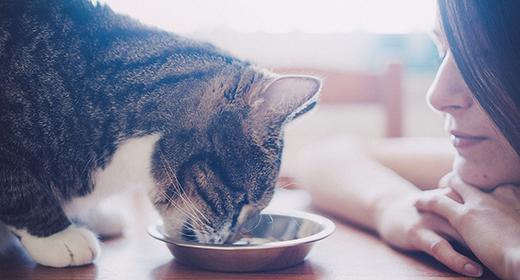
Why move your nearly grown kitten to a premium adult cat food? Because quality counts. It's crucial to continue the superb nutrition she's been getting from a premium kitten food into adulthood. Downgrading to a basic nutrition brand at this stage of her life may upset her digestive system and certainly won't provide her with the same type of nutrition she was raised on.
Think of a baby. When it's time to start giving him solid food, you wouldn't feed your child anything less than the best nutrition you can buy. The same is true for your maturing kitten. She needs the best age-appropriate food there is to help maintain overall health. Premium foods such as IAMS are formulated to meet all her needs and provide additional benefits. They're specifically designed to provide your cat with a formula that features:
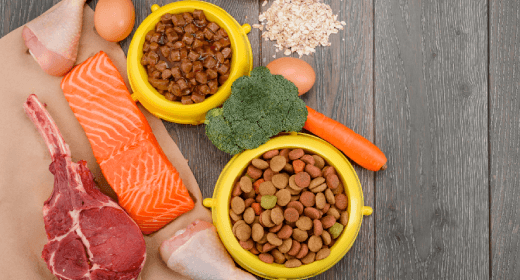
High-quality ingredients
Balanced, optimal levels of protein, fat, moderately fermentable fiber, carbohydrates, vitamins, and minerals, which make costly supplements unnecessary
High-quality recipes and great taste
Standards that meet or exceed Association of American Feed Control Officials standards
Nutrient-dense formulas that are right for each life stage
Product guarantees
What do all of these features add up to? A happy, healthy cat. With premium cat food, you can expect to see these important indicators of good health. They contribute to providing your cat with a long, healthy life:
Exceptional muscle tone
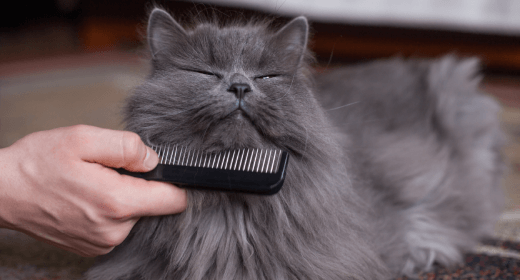
A shiny, luxurious coat
Healthy skin and bones
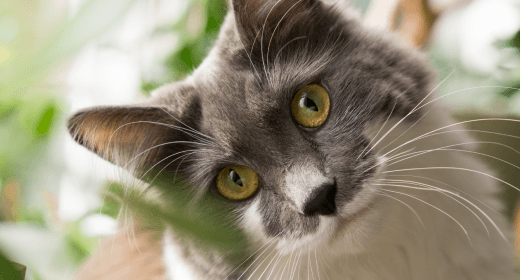
Clear, bright eyes and clean teeth
Small, firm stools
Founded upon decades of research, premium formulas from IAMS help maintain your cat's health and help provide him with the nutrition he needs for a long life. Generic brands simply may not match the level of expertise that goes into every bag of IAMS cat food.
When your cat is about 12 months of age, it's time to change her diet to a premium maintenance formula. When you transition your cat to an adult diet, it's important to monitor her weight and body condition and adjust portions if necessary.
Because cats generally eat only what they need, free-choice feeding is adequate for most cats. (Free-choice makes food available to your cat around the clock and lets her eat when and how much she needs.) Indoor cats that don't get much exercise, however, may overeat if fed free-choice. For them, portion-controlled feeding twice a day is a better routine.
To determine how much food to give your cat, check the recommendations of the pet food manufacturer on the label. Use the guidelines and weigh your cat on a weekly basis. If your cat is gaining or losing weight and shouldn't be, slightly adjust her daily intake and weigh her again the following week.
To avoid intestinal upsets, make the change from a kitten formula to an adult diet over a period of four days with the following method:
Day One: Fill your cat's dish with 75% kitten food and 25% adult food.
Day Two: Mix adult and kitten food in a 50/50 ratio.
Day Three: Feed your cat a mixture that's 75% adult food and 25% kitten food.
Day Four: Switch to 100% adult formula.
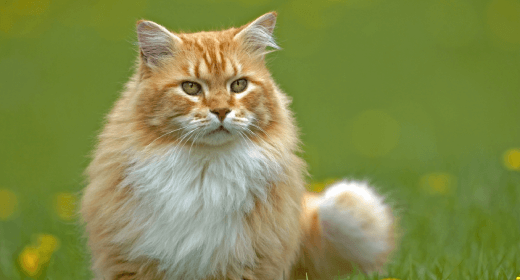
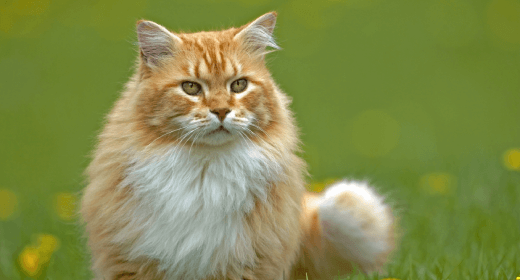
Nutrients such as protein, fat, vitamins, and minerals are important players in the skin and coat health of dogs and cats. To understand their role, it is necessary to first understand skin and hair.
The purpose of skin and hair is to block things (such as water or heat) from leaving, or things (such as viruses and bacteria) from entering the body.
The hair coat is composed almost entirely of protein. If an animal's diet doesn't contain adequate protein quantity and quality, hair may fall out, or become dry, weak, and brittle.
Skin is made up of squamous cells, which are flat cells tightly packed together. These cells have tough membranes that are composed of proteins and fats. Without proper amounts of these nutrients, cell membranes weaken, allowing water to escape and bacteria and viruses to enter more easily.
Proteins are found in both animal-based and plant-based ingredients. Animal-based proteins contain all the essential amino acids cats need, whereas plant-based proteins may contain only some essential amino acids. Cats need animal-based proteins to achieve optimal health.
Fats also can be found in both animal-based and plant-based ingredients, and they are incorporated into skin cells as fatty acids. There are two essential fatty acids for skin and coat health. Linoleic acid maintains skin and coat condition in dogs and cats. Without enough linoleic acid cats may experience dull, dry coat, hair loss, greasy skin and increased susceptibility to skin inflammation. Cats also require arachidonic acid for normal skin and coat health.
Both of these essential fatty acids are omega-6 fatty acids and are found in animal tissues such as chicken fat. Linoleic acid is also found in some vegetable oils, such as corn and soybean oils. Most commercial cat diets contain more than adequate amounts of omega-6 fatty acids.
Because these fatty acids can be converted to compounds that increase susceptibility to skin inflammation, it is important to balance the amount of omega-6 fatty acids in the diet with omega-3 fatty acids, which do not reduce susceptibility to inflammation.
Omega-3 fatty acids are found in oils from fish and some plants (canola and flax).
IAMS™ research has found that combining fat sources in the diet at a ratio of five to 10 omega-6 fatty acids to one omega-3 fatty acid results in excellent skin and coat health.
Vitamins and minerals are essential for the development of healthy skin and hair coat. The best way to provide these nutrients is through a complete and balanced diet containing appropriate amounts of essential vitamins and minerals rather than through supplements.
| Vitamin or Mineral | Important for Skin and Coat Health |
|---|---|
| Vitamin A | Necessary for growth and repair of skin |
| Vitamin E | Protects skin cells from oxidant damage |
| Biotin | Aids in the utilization of protein |
| Riboflavin (B2) | Necessary for fat and protein metabolism |
| Zinc | Necessary for fat and protein metabolism |
| Copper | Involved in tissue, pigment, and protein synthesis |
Diet is often believed to be a factor when changes in skin and coat condition are noticed. The most common causes of these changes, however, are season and life stage.
As cold weather approaches, most dogs and cats grow a thick coat to help keep heat in and cold air out. As the weather begins to warm up, they shed the thick, heavy coat.
Most kittens are born with soft, fuzzy hair, but as they age, a coarser coat grows. Pregnant or lactating cats also may experience a change in coat condition or hair loss.